
Bedroom lighting should support more than simply seeing around the room. It needs to feel comfortable in the evening, provide useful light beside the bed, illuminate wardrobes or dressing areas, and avoid glare when you are trying to relax.
A bedroom usually feels better when the light comes from several softer sources rather than one very bright ceiling fixture.
The most useful bedroom plans combine general lighting with dedicated bedside light, then add wardrobe, accent or indirect lighting only where it improves the way the room is used.
Planning ceiling spotlights? Try our Spotlight Layout Calculator.
The 4 Lighting Jobs in a Bedroom
A bedroom needs more than one type of light. Each layer supports a different activity, from getting dressed in the morning to reading in bed or creating a calmer atmosphere at night.
General Lighting
Provides comfortable overall illumination for moving around the room and using the space safely.
Typical fixtures:
- recessed spotlights
- ceiling lights
- indirect ceiling lighting
- a central decorative fixture
Bedside Lighting
Provides focused light for reading, relaxing and using the bedside area without having to illuminate the whole room.
Typical fixtures:
- wall lights
- bedside pendants
- table lamps
- adjustable reading lights
Wardrobe & Dressing Lighting
Adds useful light where clothes, colours and details need to be seen clearly.
Typical fixtures:
- wardrobes
- dressing tables
- mirrors
- storage zones
Good colour rendering is especially useful here.
Accent & Mood Lighting
Creates visual depth and a softer evening atmosphere.
Typical fixtures:
- indirect LED strip
- headboard lighting
- wall washing
- artwork lighting
- decorative bedside fixtures
A bedroom usually works best when the general light is not expected to handle reading, dressing and evening atmosphere on its own.
Bedside Lighting: Light the Person, Not Just the Bed
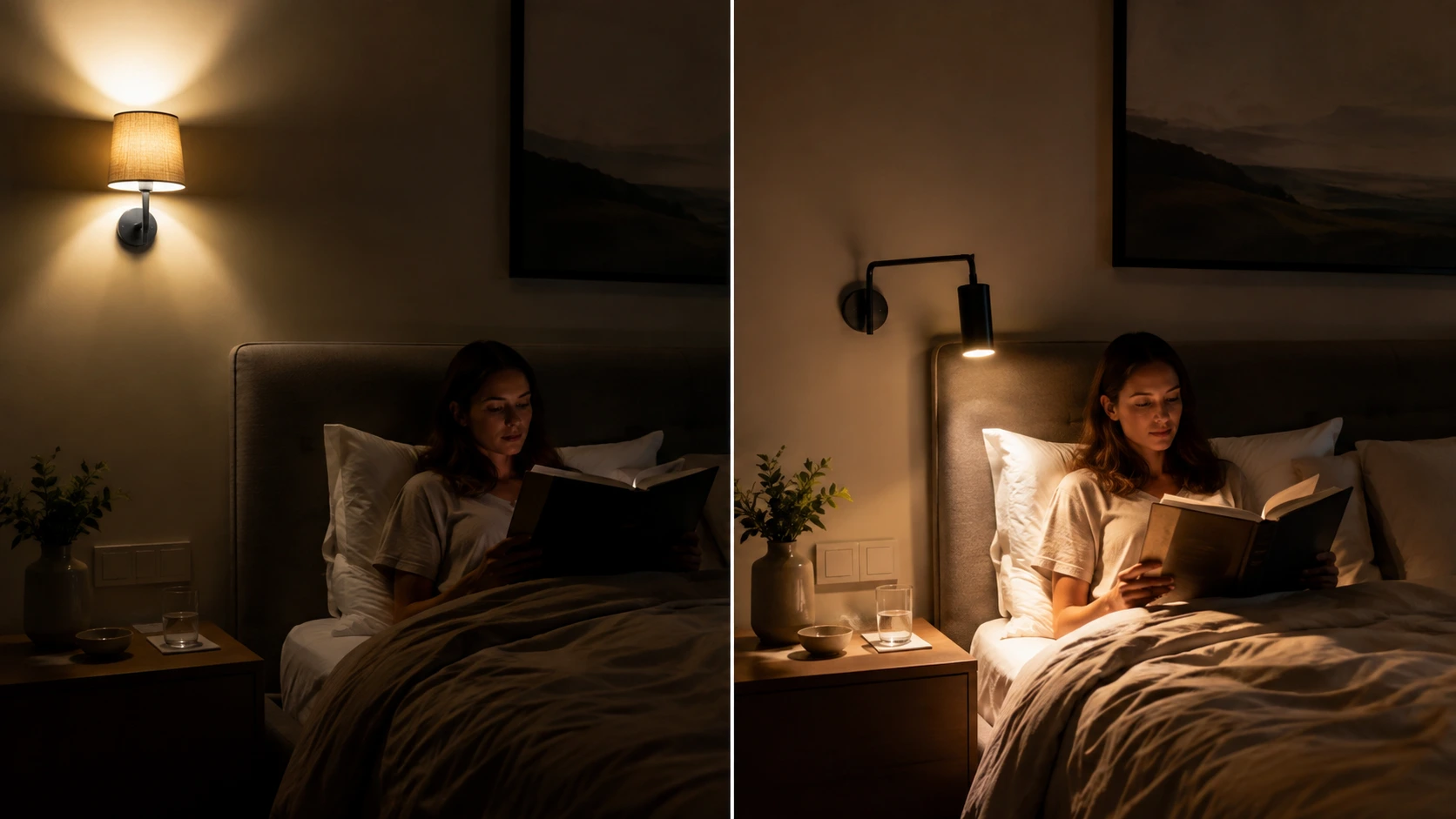
Bedside lighting should illuminate the person using the bed, not simply create a pool of light on the mattress or bedside table. Position and direction matter more than brightness alone.
Light Too High or Too Far Away
A decorative pendant or wall light can look attractive but still perform poorly if it sits too high, too far behind the user or points mainly toward the bed.
Typical result:
- the book or task area remains dim
- the face sits in shadow
- the lamp creates glare without useful light
Bring the Light Closer to the Reading Position
Place the bedside light so it reaches the reading area from the side or slightly above shoulder level.
Good options include:
- adjustable wall lights
- bedside pendants positioned close to the user
- table lamps with controlled shades
- directional reading lights
1. Position for the User
Plan the fitting around where the person actually sits or lies, not only around the centre of the bedside table.
2. Control Glare
Avoid exposed bright light sources directly within the line of sight when lying in bed.
3. Give Each Side Independent Control
Where possible, allow each bedside light to switch independently so one person can read without lighting the whole room.
A bedside light can be decorative and still fail as a reading light. The useful test is whether it comfortably illuminates the person and task without glare.
How Much Light Does a Bedroom Need?
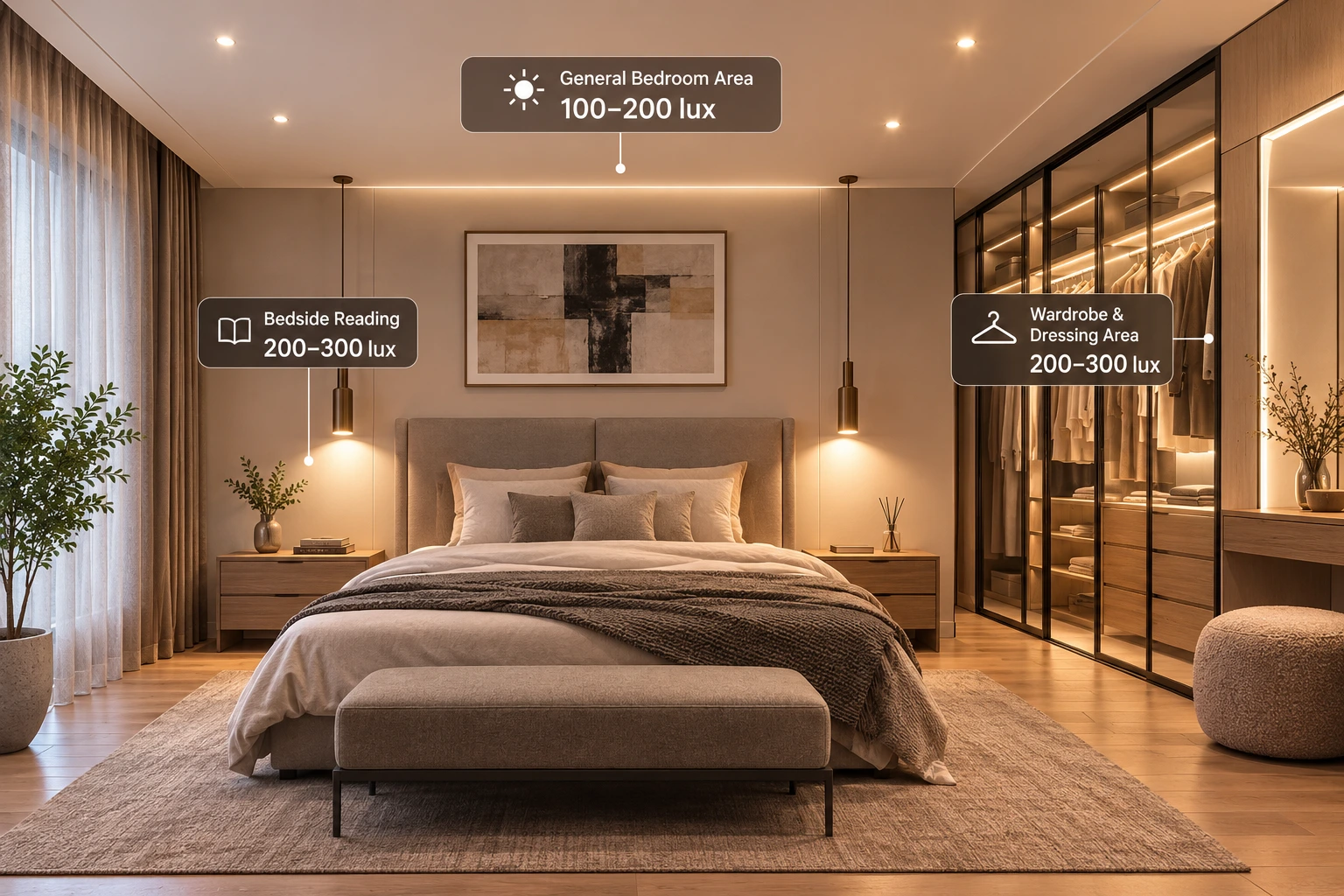
Bedrooms usually need less general light than kitchens or workspaces, but different areas can still require different light levels. The goal is to provide enough light for dressing and movement without making the room feel overly bright at night.
General Lighting
A useful starting range for overall bedroom illumination is often:
100–200 lux
This is usually enough for moving around the room, making the bed and general use.
Reading & Bedside Tasks
Reading areas usually benefit from more focused light:
200–300 lux
The important point is not only brightness, but placing the light close enough to the book or task so it does not need to illuminate the whole room.
Wardrobe & Dressing Areas
Areas used for selecting clothes, dressing or using a mirror can benefit from:
200–300 lux
Good colour rendering is also useful here because clothing and finishes should appear natural.
Example: 4 × 4 m Bedroom
A 4 × 4 m bedroom has an area of: 16 m²
Using 150 lux as a starting point for the general lighting: 16 m² × 150 lux = 2,400 lumens
This gives a useful estimate for the total general-light requirement. But that does not mean the room needs one 2,400-lumen ceiling fixture.
You can distribute the light across:
- ceiling fixtures
- bedside lights
- indirect lighting
- wardrobe or dressing-area lighting
Bedrooms often feel more comfortable when the required light is distributed across several sources instead of concentrated into one bright ceiling fixture.
Calculate your bedroom lighting requirement with our Lux & Lumens Calculator.
Ceiling Spotlights: Avoid Turning the Bedroom Into a Grid
Bedroom spotlights should support the room layout, not simply form a perfectly even pattern on the ceiling. A rigid grid can create unnecessary brightness over the bed while leaving wardrobes or useful areas under-lit.
1. Avoid Strong Downlight Directly Over the Pillow
A bright spotlight above the head of the bed can feel uncomfortable when lying down.
Where possible, position general spotlights around the bed rather than directly over the sleeping position.
2. Light the Areas That Actually Need It
Use the wardrobe, dressing table, circulation path and artwork to guide spotlight placement.
The ceiling plan should respond to the furniture layout below.
3. Don’t Add Spotlights Just to Fill Empty Ceiling Space
Bedrooms often need less general lighting than kitchens or workspaces.
A smaller number of well-positioned fixtures can create a calmer result, especially when bedside and indirect lighting are already present.
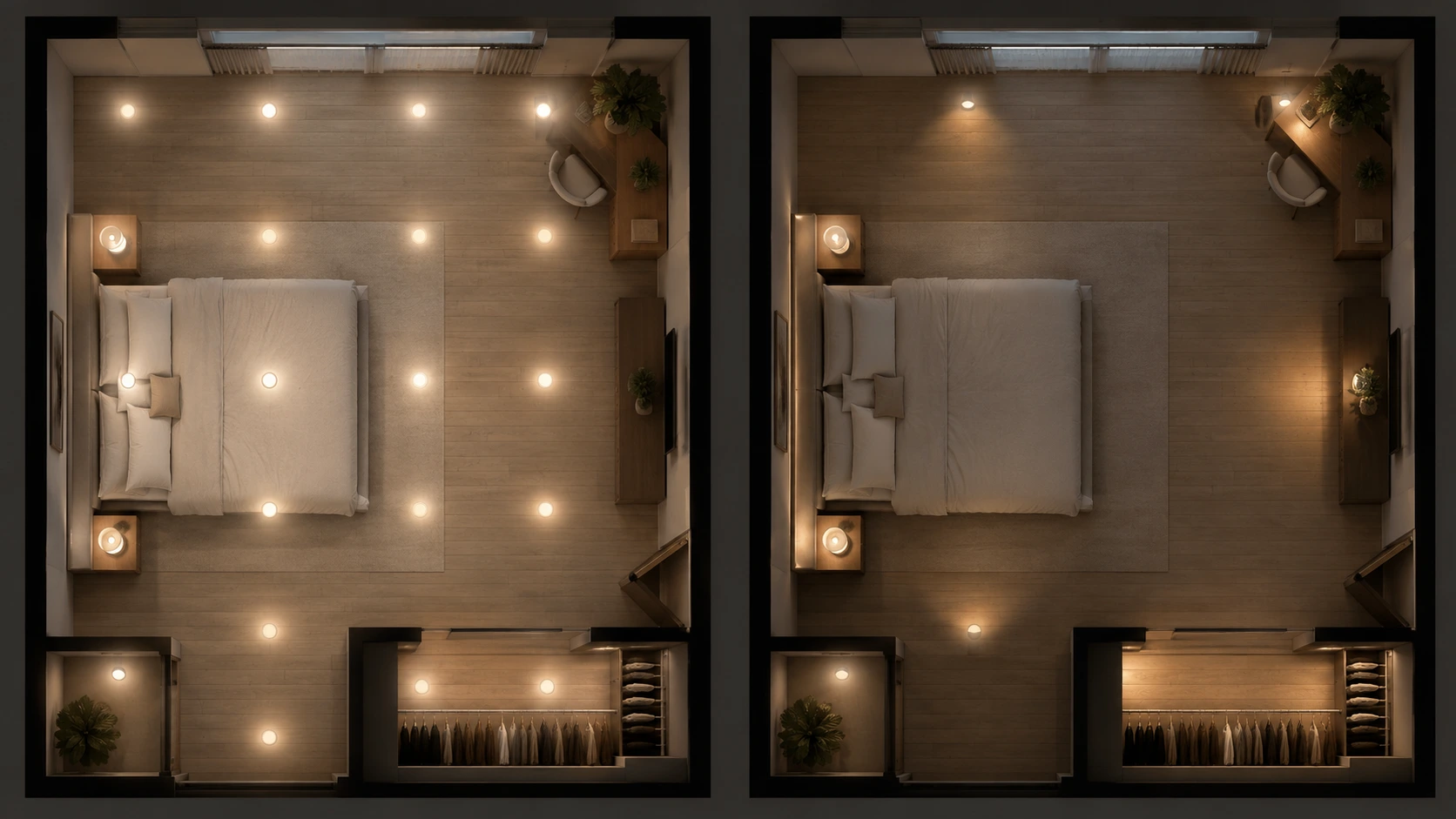
Comparison
Grid-Centred Layout
Creates visually even dots on the ceiling but may put unnecessary light over the bed and miss useful zones.
Function-Centred Layout
Moves fixtures toward wardrobes, circulation and accent areas while keeping the sleeping zone more comfortable.
A bedroom ceiling does not need to look fully populated with spotlights. The best layout often leaves some areas intentionally quieter.
Plan your spotlight positions with our Spotlight Layout Calculator.
Wardrobe & Dressing Area Lighting
Wardrobe and dressing areas need light that helps you see colours, fabrics and details clearly. The goal is to illuminate the person and the clothing without creating strong shadows or colour distortion.
For concealed wardrobe lighting, use the LED Strip Lighting Design Guide to check the strip, profile, driver and control arrangement
2. Use Good Colour Rendering
Good colour rendering helps clothing, skin tones and finishes look more natural.
Practical note:
CRI 90+ is a strong choice where accurate colour appearance matters.
3. Light the Person, Not Just the Mirror
For dressing tables or full-height mirrors, avoid one bright source directly above the head.
More balanced front or side lighting can reduce facial shadows and reflections.
Comparison
Poor Setup
One ceiling light behind the user creates shadows on the clothes and darker facial areas at the mirror.
Better Setup
Light is positioned in front of the wardrobe and near the mirror, giving clearer visibility and more even colour appearance.
Wardrobe lighting is useful when it improves visibility first. Decorative glow should come second.
1. Put Light Where the Clothes Are
If the light source sits behind you, your body can cast a shadow into the wardrobe.
Better options include:
- ceiling spots positioned in front of the wardrobe
- integrated wardrobe lighting
- linear LED lighting inside or above storage areas
Colour Temperature & Evening Comfort
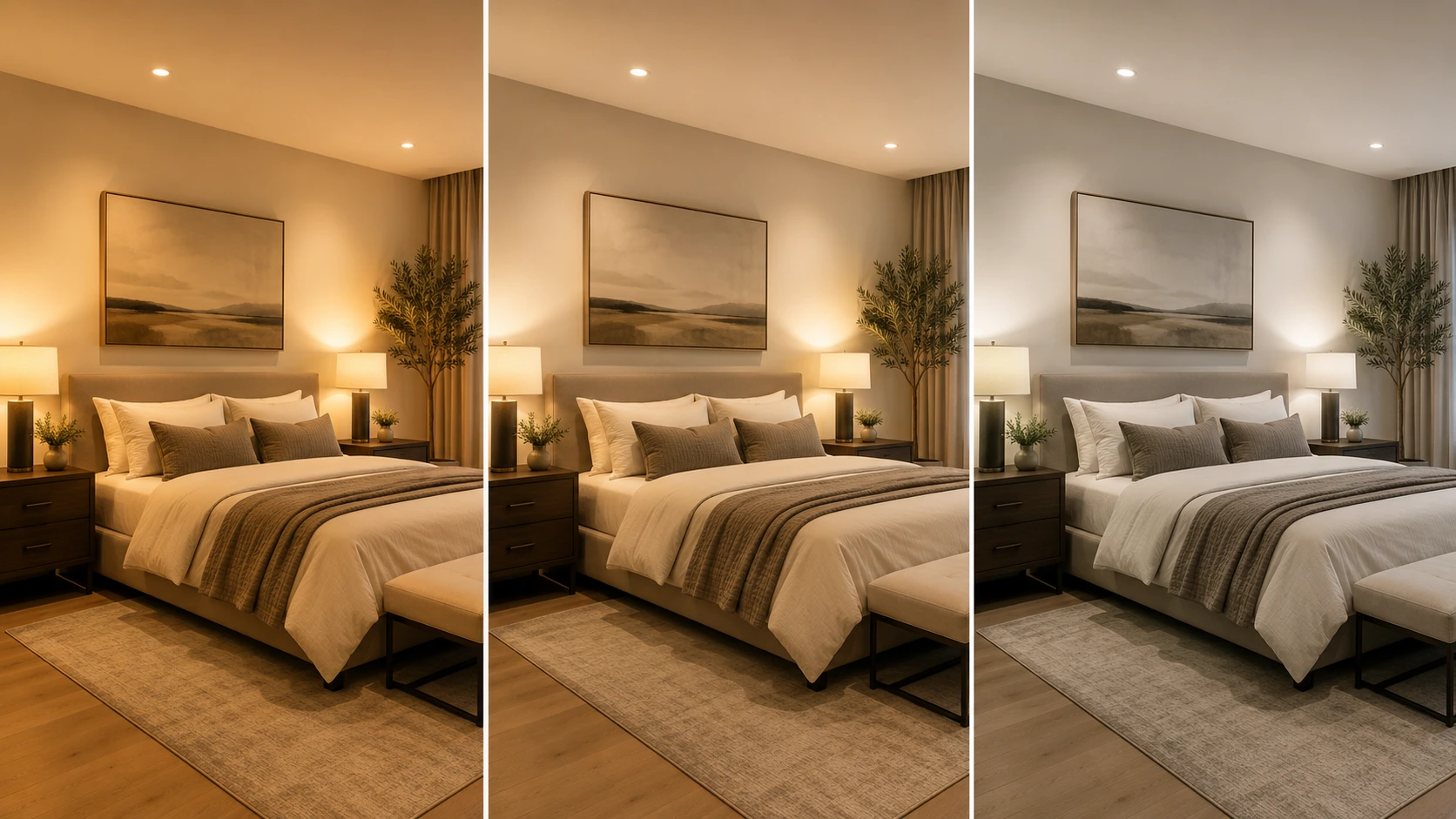
Bedroom lighting should support relaxation as well as visibility. Colour temperature changes the appearance of white light, and warmer light usually feels more comfortable in spaces used for resting and winding down.
2700K — Warm & Relaxed
Creates a softer, warmer appearance.
Often suitable for:
- bedside lamps
- decorative lighting
- indirect lighting
- evening atmosphere
3000K — Warm but Clear
Provides a warm residential feel while remaining practical enough for general bedroom lighting.
Often a strong all-round choice for:
- ceiling lights
- spotlights
- wall lights
- wardrobes
- bedside lighting
4000K — Cleaner & More Neutral
Creates a crisper, more neutral appearance.
It can be useful in dressing or wardrobe areas, but may feel less relaxing if used as the dominant bedroom light late in the evening.
Think About What Happens After the Main Light Is Switched Off
A bedroom often benefits from a softer second lighting mode for late evening use.
This could include:
- bedside lamps
- low-level wall lights
- indirect LED lighting
- dimmed general lighting
- separate accent circuits
The aim is to reduce the need for a very bright ceiling light when preparing to sleep.
The best bedroom colour temperature is not only about appearance. It should also match how the room is used throughout the evening.
5 Common Bedroom Lighting Mistakes
A bedroom can have plenty of light and still feel uncomfortable. Most problems come from poor placement, too much brightness, or asking one lighting layer to do every job.
One central fixture may light the room, but it usually does not provide good bedside, wardrobe or evening lighting.
Use separate layers so the room can adapt to different activities.
Strong downlight above the pillow area can feel uncomfortable when lying down.
Use spotlights around the bed and rely on bedside lighting for reading and local tasks.
A decorative fixture can look good but still create glare or leave the reading area too dark.
Check the height, direction and shielding from the actual sitting or lying position.
If all the lighting is concentrated around the bed, wardrobes and mirrors can remain poorly lit.
Give these zones their own useful light where needed.
Bedrooms benefit from different lighting modes.
Separate control for general, bedside, wardrobe and accent lighting makes the room easier to use in the morning and more comfortable at night.
Quick check: if the room only feels usable when every light is switched on, the lighting layers are probably not doing distinct jobs.
Build Your Bedroom Lighting Plan
Start with the way the bedroom is actually used, then choose the lighting layers that support each zone without making the room unnecessarily bright.
I’m Planning the General Lighting
Estimate the overall light requirement first, then distribute it through the room using ceiling, indirect and accent lighting.
I’m Planning the Spotlights
Use the bed, wardrobe, dressing area and circulation path to guide the ceiling layout.
Avoid placing strong downlights directly over the pillow area unless the fixture and aiming are specifically suited to it.
I’m Choosing Bedside or Accent Lighting
Use wall lights, pendants, table lamps or indirect lighting to create a more comfortable second lighting layer for reading and evening use.