
3000K vs 4000K: Quick Answer
The main difference between 3000K and 4000K lighting is colour appearance: 3000K produces a warmer, softer white light, while 4000K produces a cleaner, more neutral white light.
Choose 3000K for living rooms, bedrooms, dining areas, restaurants and hospitality spaces where warmth and atmosphere are important. Choose 4000K for offices, work areas, functional kitchens and commercial spaces where visual clarity is the priority.
Neither colour temperature is automatically brighter. Brightness depends primarily on lumen output, beam angle, fixture efficiency and the lighting layout.
For most elegant residential interiors, Saleh Deco normally recommends beginning with 3000K.
What Do 3000K and 4000K Mean in LED Lighting?
In LED lighting, 3000K is commonly described as warm white, while 4000K is described as neutral white.
- 3000K is described as warm white.
- 4000K is generally described as neutral white.
The lower temperature has a warmer, more golden appearance. The higher temperature appears cleaner and less yellow. US Department of Energy material also uses 3000K as a warm-white reference and 4000K as a neutral-white reference.
Colour temperature describes the appearance of the light, not the amount of light produced.
A 4000K fixture is therefore not automatically brighter than a 3000K fixture. Brightness and lighting performance also depend on lumen output, beam angle, fixture efficiency, distribution and installation conditions.
3000K vs 4000K Comparison Table
| Factor | 3000K | 4000K |
|---|---|---|
| Appearance | Warm white | Neutral white |
| Atmosphere | Soft and welcoming | Clean and focused |
| Typical use | Residential and hospitality | Work and commercial spaces |
| Complements | Wood, beige, brass, warm stone | White, grey, chrome, concrete |
| Relaxation | Generally preferred | More functional |
| Decorative lighting | Very suitable | Depends on interior style |
| Task areas | Suitable with enough output | Often preferred |
| Overall character | Warm and elegant | Crisp and neutral |
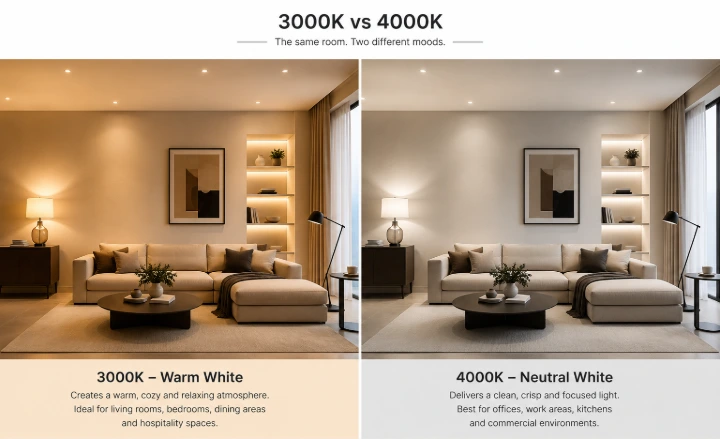
Where Does 3000K Lighting Work Best?
3000K is normally selected for spaces where comfort, atmosphere and decorative materials are important.
It works particularly well in:
- Living rooms
- Bedrooms
- Dining rooms
- Residential corridors
- Hotel rooms
- Restaurants and cafés
- Lounges and reception spaces
- Luxury boutiques
- Warm decorative displays
Its warmer appearance complements timber, beige and cream finishes, brass, bronze, warm marble, natural fabrics and traditional decorative details.
It is especially effective with:
- Decorative chandeliers
- Pendant lights
- Wall lamps
- Table and floor lamps
- Recessed spotlights
- Indirect LED lighting
Saleh Deco perspective
In residential interiors using wood, beige stone, warm upholstery or brass finishes, 3000K usually creates the most harmonious result. It provides enough visual clarity while preserving the calm atmosphere expected from a living space.
Where Does 4000K Lighting Work Best?
4000K produces a cleaner and more neutral appearance. It is commonly used where concentration, visibility and a functional visual environment are priorities.
It can work well in:
- Offices
- Workspaces
- Commercial kitchens
- Utility rooms
- Clinics
- Supermarkets
- Technical retail stores
- Workshops
- Product preparation areas
- Selected bathroom and mirror applications
4000K also complements interiors based on white surfaces, cool grey finishes, chrome, glass and concrete.
However, it should be selected intentionally. Using 4000K throughout a warm residential interior can make wood, beige and decorative finishes appear colder than intended.
3000K or 4000K: Which Is Best for Each Room?
Use the following colour-temperature starting points. Follow the room guide for fixture placement, lighting layers and task requirements.
| Room or application | Starting point |
|---|---|
| Living room | 3000K |
| Bedroom | 3000K |
| Dining room | 3000K |
| Kitchen | 3000K or 4000K, coordinated with adjoining spaces |
| Bathroom | 3000K or 4000K, with suitable mirror lighting |
| Home office | 3000K or 4000K, according to the working environment |
| Commercial office | 4000K as a starting point |
| Retail or showroom | Choose for the merchandise and brand atmosphere |
| Restaurant or café | 3000K as a warm starting point |
Can You Mix 3000K and 4000K in the Same Space?
Yes—but only when the difference has a clear purpose.
Avoid randomly installing 3000K and 4000K fixtures within the same ceiling arrangement. The colour difference will be visible and can make the installation look inconsistent or accidental.
Better approaches include:
- 3000K ambient lighting with a separately defined task area
- Different temperatures in physically separated rooms
- Separate switching circuits
- Tunable-white fixtures where flexibility is genuinely needed
- Distinct display zones in a showroom
In an open-plan living and dining area, using one consistent colour temperature usually creates the more refined result.
Is 4000K Brighter Than 3000K?
Not automatically.
Colour temperature and brightness are different characteristics.
To compare the actual light produced by two fixtures, consider:
- Lumens
- Beam angle
- Fixture efficiency
- Optical design
- Installation height
- Light distribution
- Surface colours
- Reflectance
- Dimming level
A 4000K source may sometimes appear visually crisper, but that does not prove that it produces more usable light.
To compare actual light output and calculate room requirements, see our Lux vs Lumens Lighting Guide.
Does Wattage Determine Brightness?
Not by itself.
For running costs and upgrade comparisons, use the LED energy savings and payback guide. Choose colour temperature for appearance and compare light output separately.
Wattage describes electrical power consumption. Lumen output describes the amount of visible light emitted.
Two 10W LED fixtures may produce different lumen outputs because of differences in LED chips, drivers, optics, thermal management and construction.
When comparing Saleh Deco products, review the complete specification rather than choosing only by wattage.
What About CRI?
Colour temperature describes the appearance of white light; colour rendering describes how colours appear under it. Two 3000K fixtures can render the same materials differently. See Light Quality Explained: CRI, Glare, Flicker and Colour Consistency for the full comparison.
💡Saleh Deco Recommendation
For most elegant residential interiors, begin with 3000K.
It creates a warm and welcoming atmosphere and works naturally with wood, stone, fabric, brass and decorative lighting.
For offices, technical workspaces, functional kitchens and selected commercial environments, consider 4000K.
The final decision should also account for lumen output, CRI, beam angle, glare, fixture spacing, ceiling height, dimming, daylight and interior finishes.
The best lighting scheme is not simply warm or neutral. It is a coordinated combination of atmosphere, visual comfort and function.
Which One Should You Choose?
Choose 3000K if:
- You want a warm residential atmosphere
- Your interior uses wood, beige or brass
- The space is intended for relaxation or hospitality
- You are choosing decorative chandeliers or wall lights
- You prefer softer evening lighting
Choose 4000K if:
- The area is primarily functional
- You need a cleaner visual environment
- The interior uses white, grey, glass or chrome
- The space is an office or technical workplace
- Neutral task visibility is the priority
Compare both before deciding if:
- You are lighting a large project
- The space contains several functions
- Materials react differently under warm and neutral light
- The project mixes decorative and technical lighting
- You are uncertain how the light will appear in reality
Frequently Asked Questions
Is 3000K suitable for a kitchen?
Yes. It works especially well in residential kitchens connected to a warm living or dining area. Choose 4000K when a cleaner task-oriented appearance is more important.
Can I use 3000K spotlights with a 4000K LED strip?
It is technically possible, but the difference may be obvious. Keep the same colour temperature unless the sources serve clearly separated purposes.
Which colour temperature is better for a showroom?
It depends on the product and brand atmosphere. Warm 3000K suits furniture, décor, hospitality, fashion and luxury materials. Neutral 4000K suits technical and highly functional displays.
Is 4000K suitable for a living room?
It can be used, particularly in a very modern interior, but 3000K normally creates a more comfortable and welcoming residential atmosphere.
Does colour temperature affect colour accuracy?
Colour temperature changes the overall visual appearance, but CRI and spectral quality more directly address colour rendering. Review both CCT and CRI.
Should all lights in an open-plan room use the same colour temperature?
Usually yes. Consistency creates a more harmonious result. Different temperatures should only be used when the zones are clearly separated by function or architecture.
Can dimming change 4000K into 3000K?
Standard dimming only changes brightness. It does not normally change colour temperature. Tunable-white or dim-to-warm products are specifically designed to adjust their light appearance.
Explore Relevant Lighting
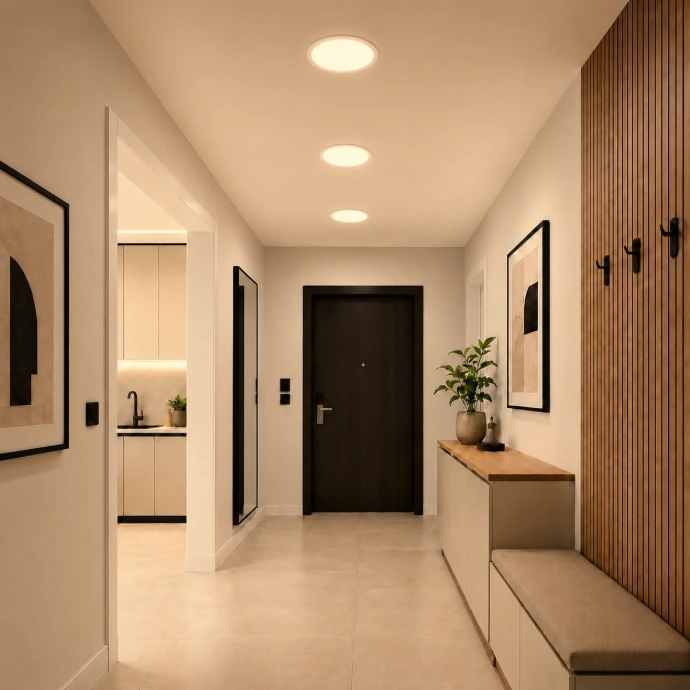
Indoor Spotlights
Recessed, surface-mounted and adjustable solutions for residential and commercial interiors.
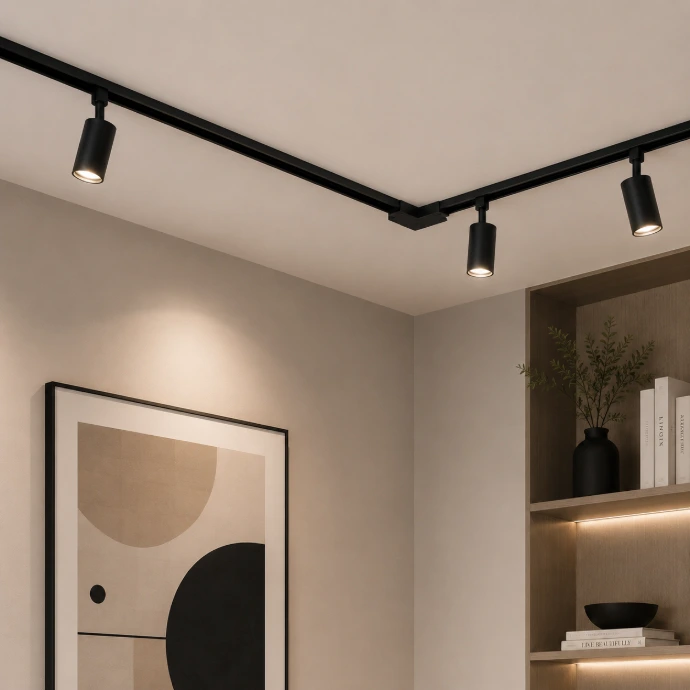
Magnetic & Track Lighting
Flexible architectural lighting systems for precise and adaptable layouts.
Explore Magnetic & Track Systems
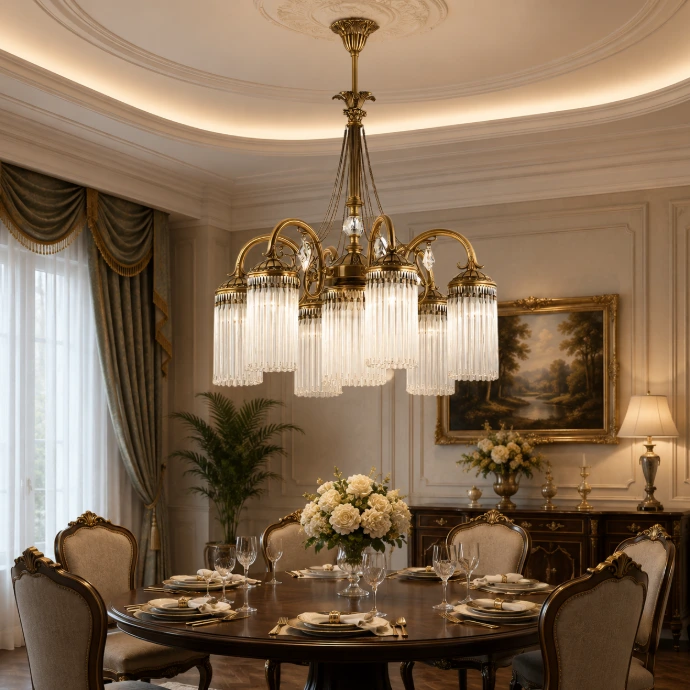
Decorative Lighting
Chandeliers, pendants, wall lights, table lamps and floor lamps for expressive interiors.
Still Unsure Which Colour Temperature to Choose?
Still deciding between 3000K and 4000K? Visit our lighting showroom in Achrafieh, Beirut, to compare warm-white and neutral-white lighting in person, or explore Saleh Deco’s decorative and technical lighting online.
Ask Saleh Deco Explore Lighting