
A living room usually does several jobs at once: relaxing, entertaining, watching TV, reading, and displaying furniture or artwork. That is why one central ceiling light rarely does everything well.
Good living-room lighting is layered, not simply bright.
The goal is to combine ambient, task, accent, and decorative lighting so the room feels comfortable, flexible, and visually balanced throughout the day.
Build the Room in Four Lighting Layers
A comfortable living room usually combines more than one type of light. Each layer has a different job, and the room works best when those layers support each other.
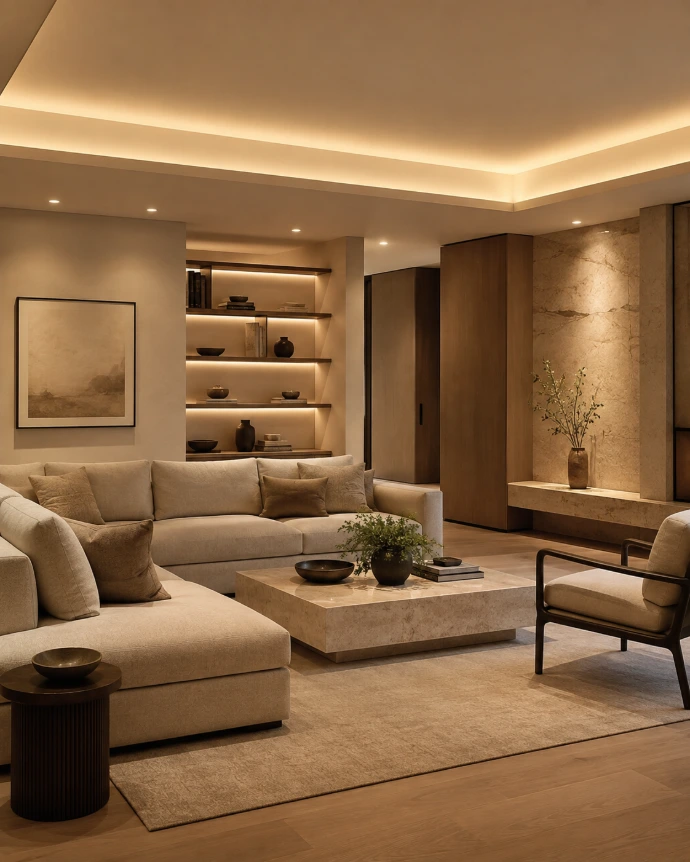
Ambient Lighting
Provides the room’s general background illumination and makes the space comfortable to move through.
Typical fixtures: ceiling lights, downlights, indirect LED lighting.
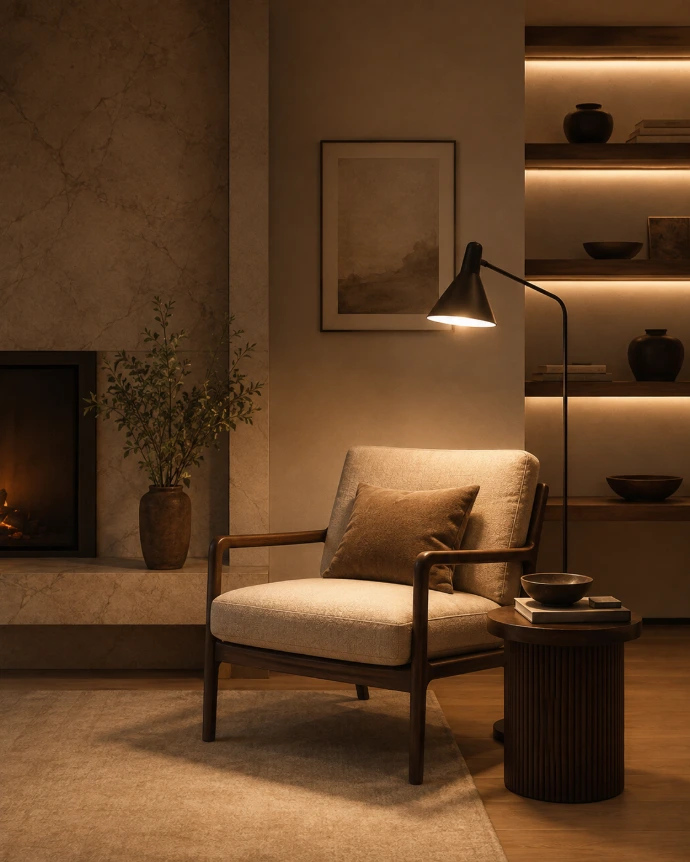
Task Lighting
Adds more focused light where an activity takes place, such as reading, working, or using a side table.
Typical fixtures: floor lamps, table lamps, reading lights.
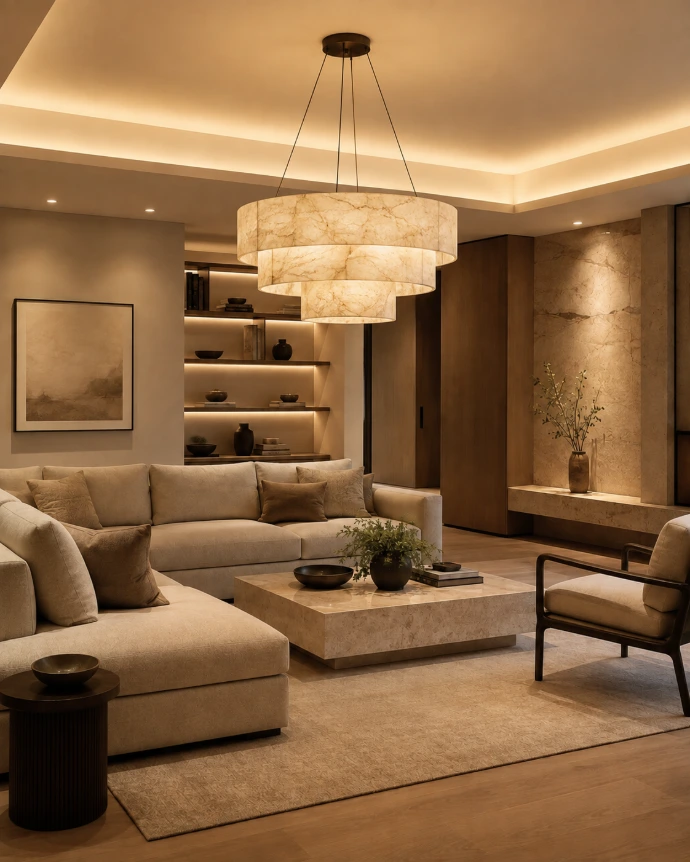
Decorative Lighting
Adds visual character and can become a focal point, but it should not automatically be expected to light the whole room.
Typical fixtures: chandeliers, pendants, decorative wall lights.
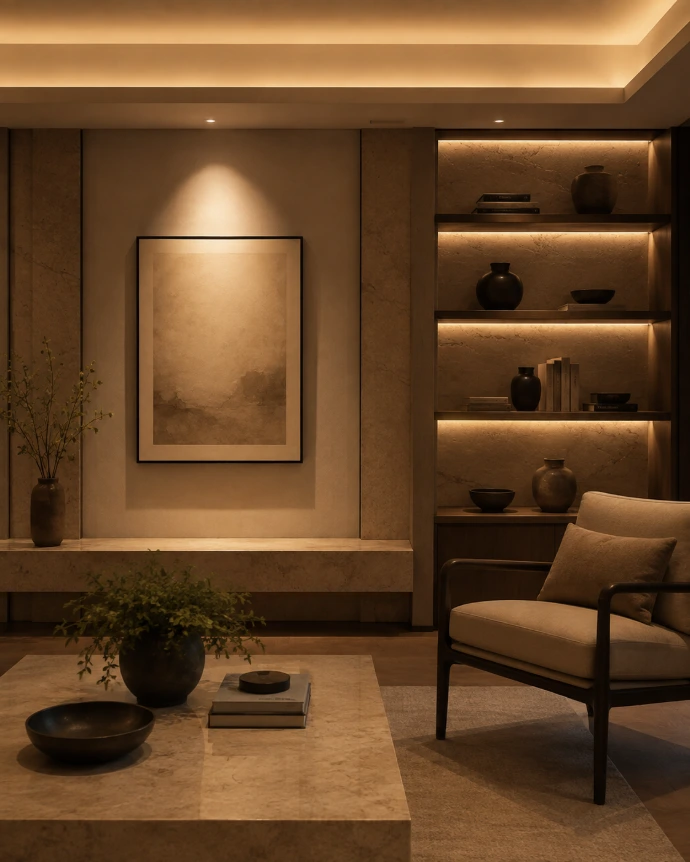
Accent Lighting
Directs attention toward artwork, textured walls, shelving, curtains, or architectural features.
Typical fixtures: spotlights, track lights, wall washers.
A useful rule: decorative lighting can create atmosphere without providing enough ambient light, while ambient lighting can make a room bright without making it visually interesting.
Ambient
Task
Accent
Decorative
How Much Light Does a Living Room Actually Need?
Lux measures how much light reaches a surface, while lumens describe how much light a source produces. One lux equals one lumen per square metre.
For living rooms, the right light level depends on what the room is used for. General ambient lighting can be relatively soft, while reading or other task areas need more focused light. Lighting guidance also varies with daylight, interior finishes and the activity taking place
A Practical Starting Point
For a typical living room, use around 100–200 lux as a practical ambient starting range.
Use lower levels when the room is mainly for relaxing and atmosphere, and higher localized lighting where people read, work or perform detailed tasks.
Useful reminder: darker finishes absorb more light, while lighter walls and surfaces reflect more of it.
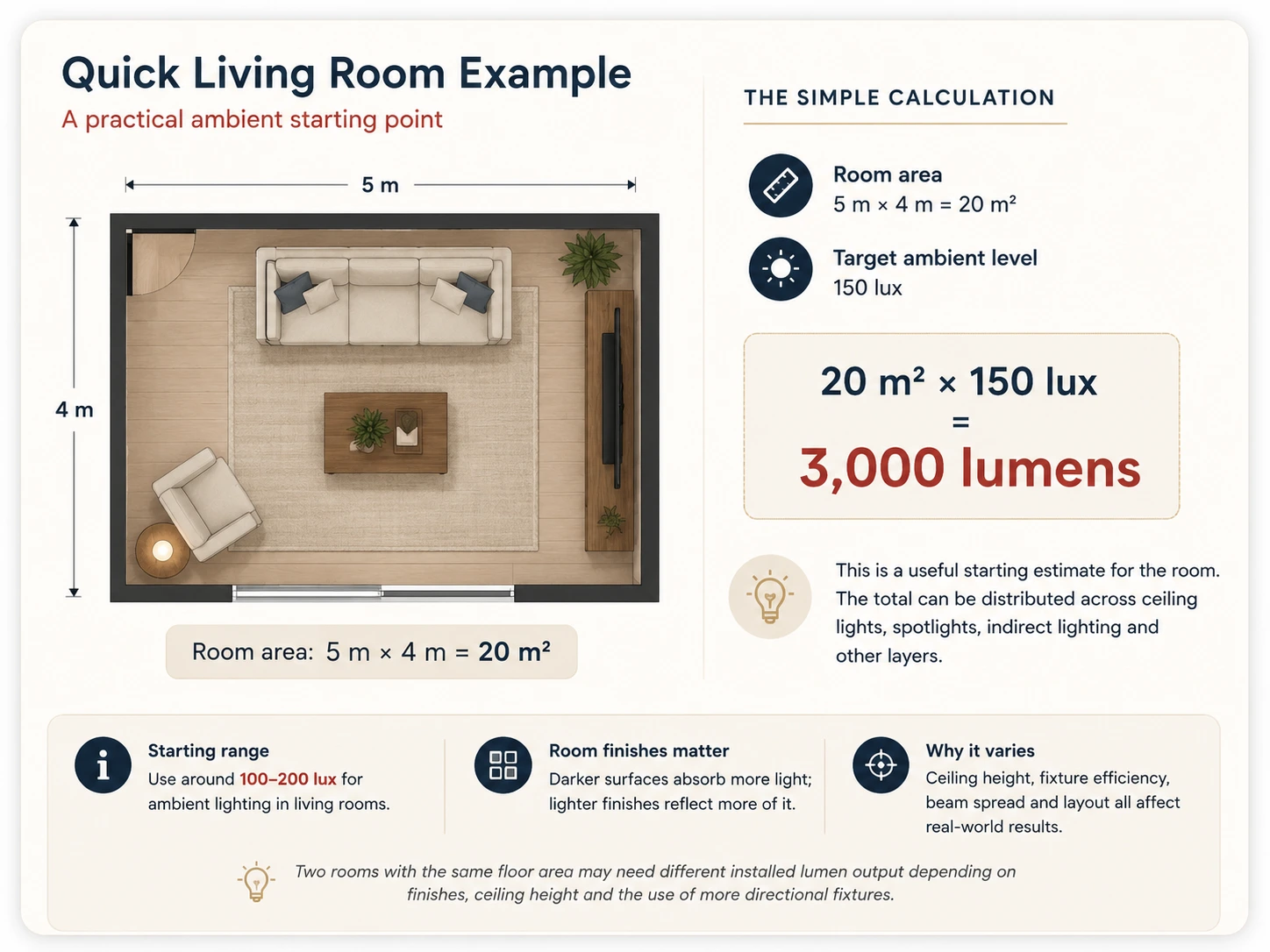
Example: 5 × 4 m Living Room
Room area: 5 m × 4 m = 20 m²
Target ambient level: 150 lux
Simple lumen starting point:
20 m² × 150 lux = 3,000 lumens
What does 3,000 lumens mean?
It is a useful starting estimate for the room—not a requirement to install one 3,000-lumen fixture. The total can be distributed across ceiling lights, spotlights, indirect lighting and other layers.
Real-world results will also depend on fixture efficiency, beam distribution, ceiling height, room finishes and placement.
Interesting point: two rooms with the same floor area may need different installed lumen output if one has dark surfaces, a higher ceiling or more directional fixtures.
Calculate Your Living Room Lighting Read the Lux & Lumens Lighting Guide
Planning Spotlights: Position Matters as Much as Quantity
A spotlight layout should follow the room, not just the ceiling. Furniture placement, artwork, walls and circulation all affect where light is most useful.
Even spacing can create a tidy ceiling, but a perfect grid is not always the best lighting plan.
Place spotlights according to what needs light below them rather than simply dividing the ceiling into equal sections.
Decide what each spotlight is meant to do.
Some may provide general illumination, while others can highlight artwork, curtains, shelving, textured walls or architectural details.
Useful idea: every spotlight should have a reason to be there.
Beam angle controls how concentrated or broad the light becomes.
24° — focused accent light
36° — balanced general/accent use
60° — wider, softer coverage
The mounting height also matters: the same beam angle spreads wider as the distance from the illuminated surface increases.
Interesting point: two living rooms can use the same number of spotlights and still feel completely different depending on where the beams land.
2700K, 3000K or 4000K for a Living Room?
Colour temperature changes the character of a room, but it does not determine how bright the room is. Warm light can still be bright, and cooler light can still be dim.
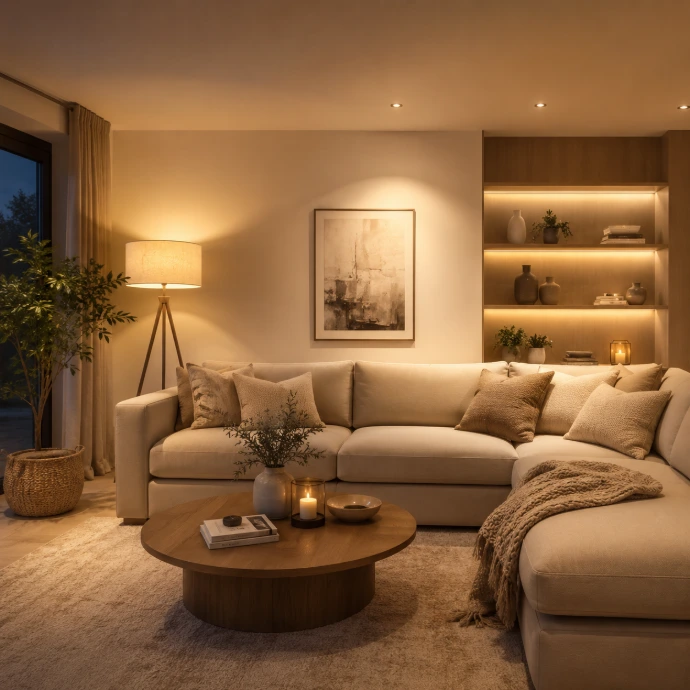
2700K
Warm and relaxed
Creates a softer, more intimate atmosphere that works well for evening use, decorative lighting and cosy seating areas.
Best suited for: relaxed residential interiors and mood-focused spaces.
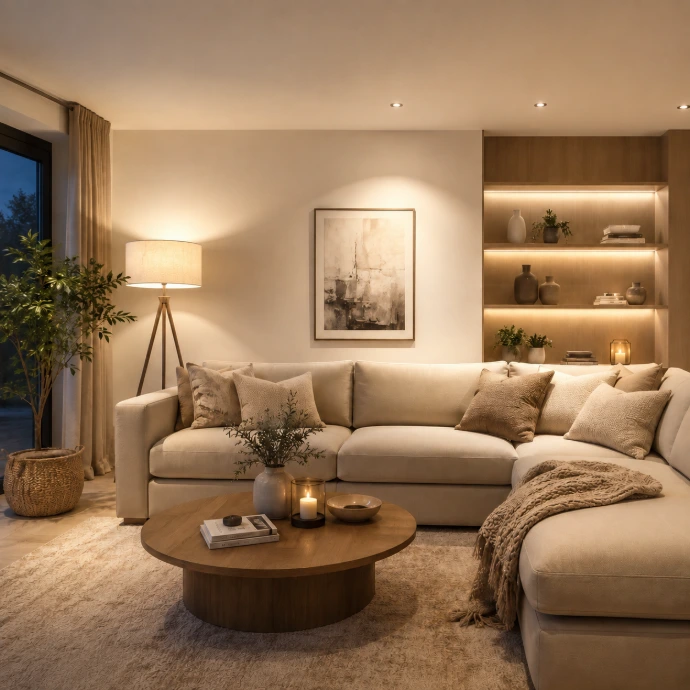
3000K
Warm but versatile
Keeps a comfortable residential feel while appearing slightly cleaner and more neutral than 2700K.
Best suited for: most living rooms, mixed lighting layers and everyday use.
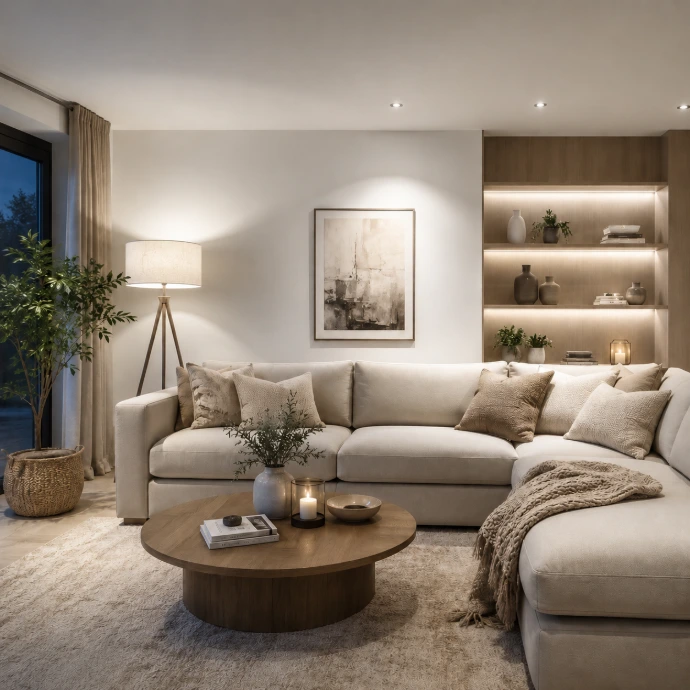
4000K
Crisper and more functional
Creates a cleaner, more neutral appearance that can work in contemporary interiors or where a brighter, task-oriented feel is preferred.
Best suited for: functional zones or spaces where a cooler visual character is intentional.
Useful point: colour temperature and brightness are separate decisions. Choose CCT for atmosphere and visual character, then use lux and lumen planning to determine how much light the room needs.
Which Fixtures Belong in a Living Room?
Choose fixtures by the job they need to do, not by appearance alone. A balanced living room usually combines several fixture types rather than relying on one source.
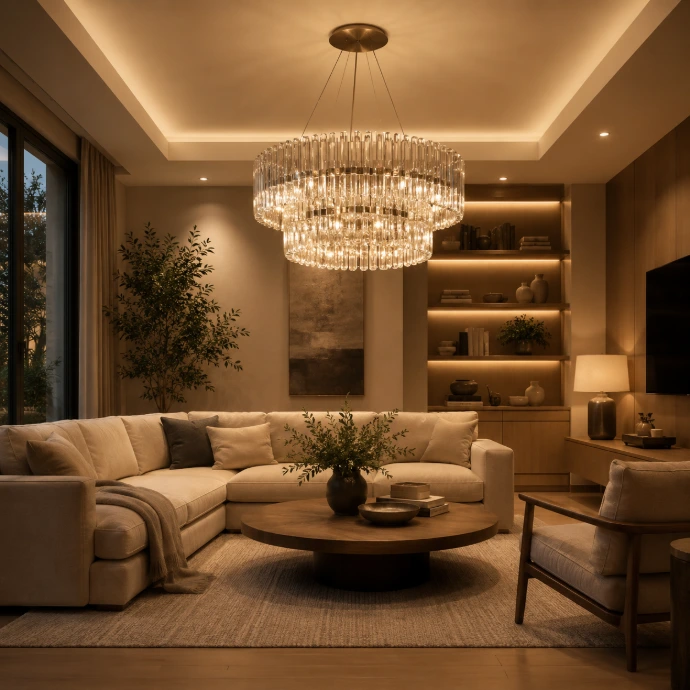
Chandeliers & Pendants
Best role: decorative focal point
Use them to anchor the room visually, especially over a central seating area or where the ceiling height and proportions support a statement fixture.
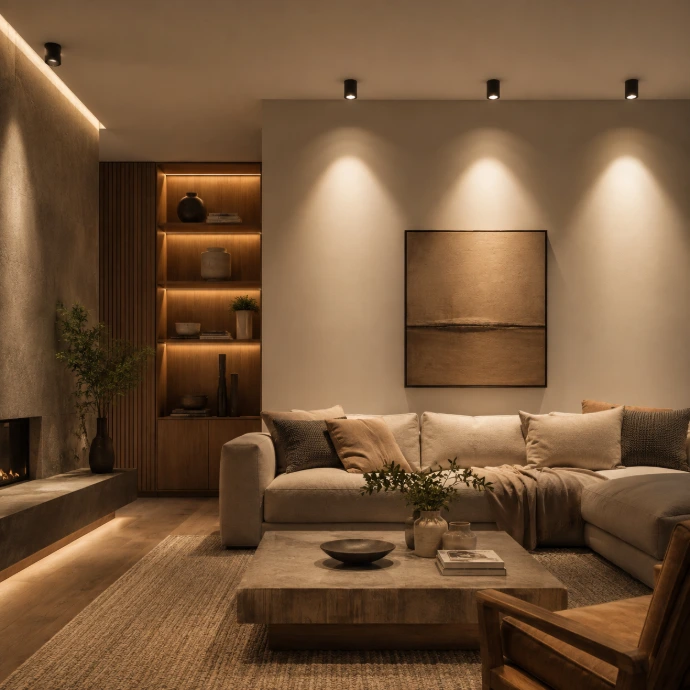
Spotlights
Best role: general and targeted lighting
Useful for overall illumination, artwork, walls, curtains, shelving and architectural details.
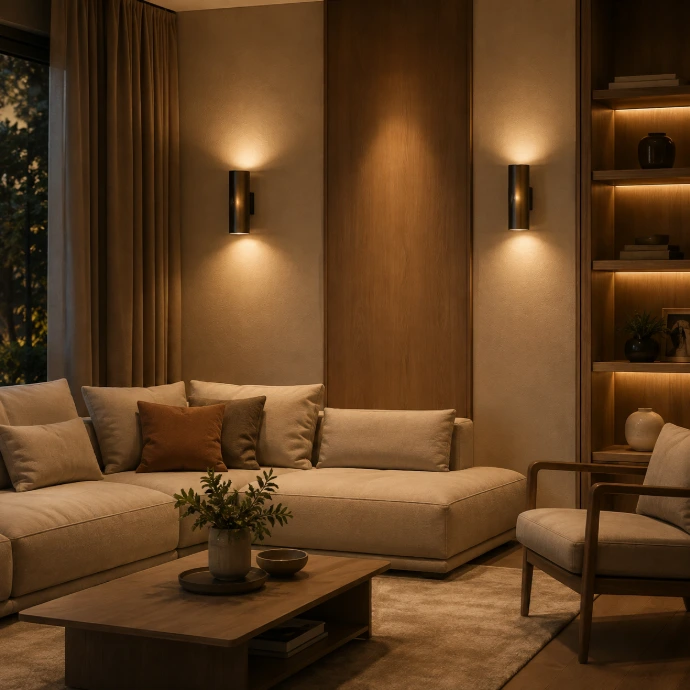
Wall Lights
Best role: atmosphere and vertical illumination
Wall lighting adds depth and can make the room feel more visually balanced without relying only on ceiling light.
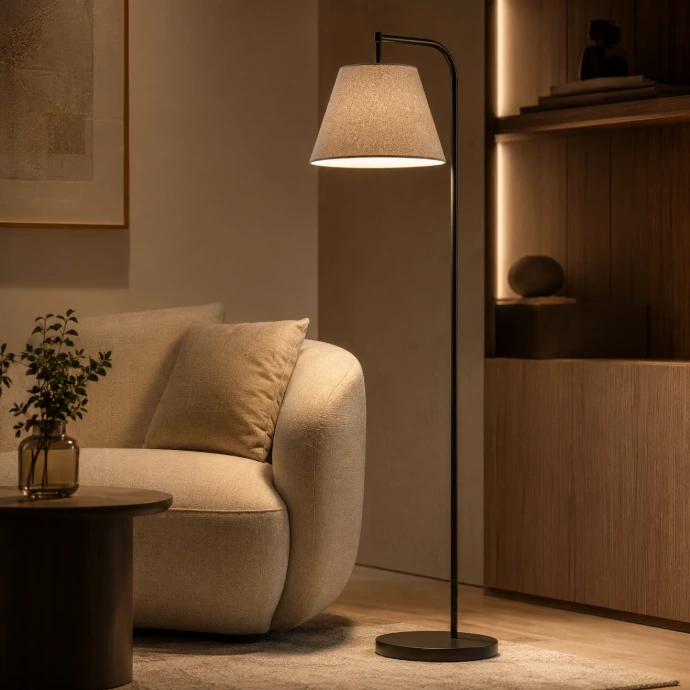
Floor Lamps
Best role: flexible task and reading light
A floor lamp can add useful localized lighting next to a sofa, armchair or reading corner without changing the ceiling layout.
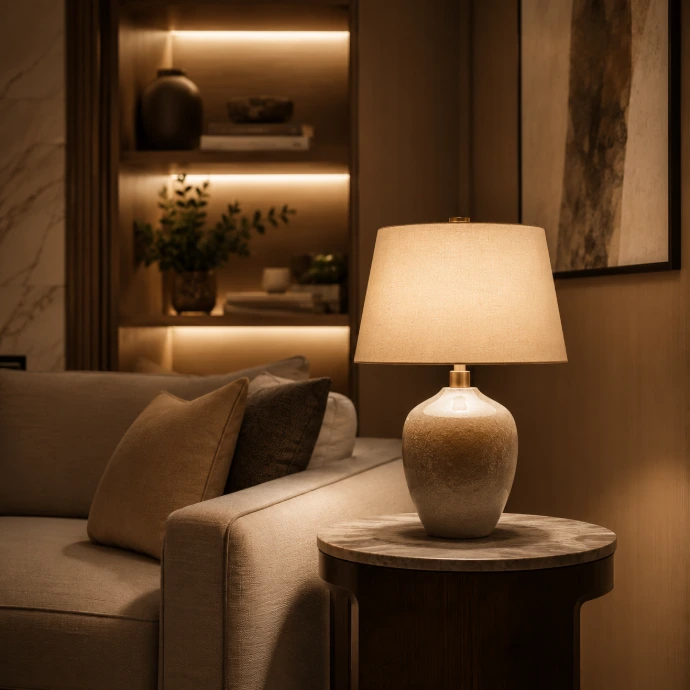
Table Lamps
Best role: localized ambient and accent light
Useful on consoles, side tables and shelves where softer light helps create atmosphere.
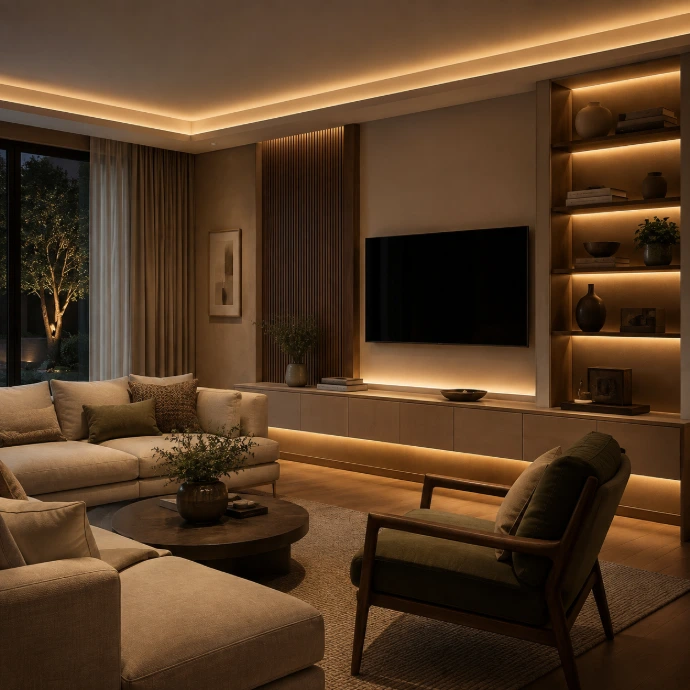
LED Strips
Best role: indirect and integrated lighting
Useful in shelving, joinery, coves and architectural details where concealed light can create depth without visible fixtures.
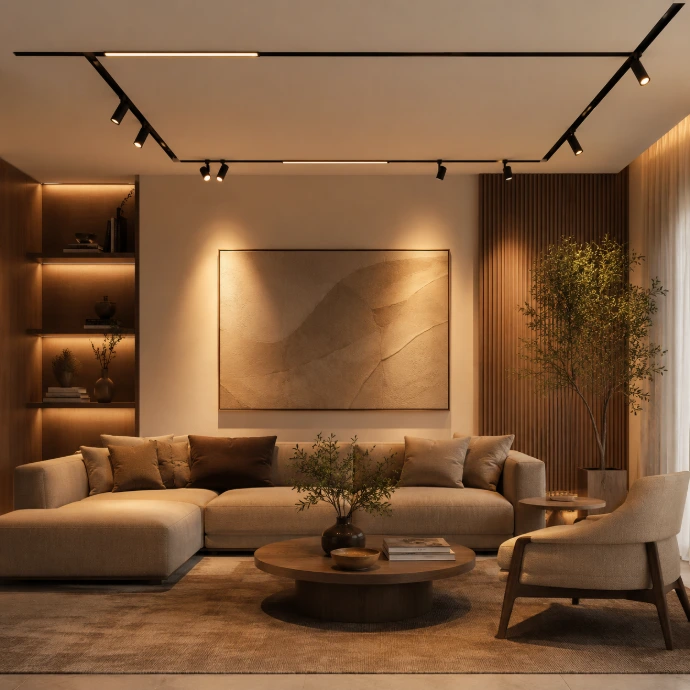
Track & Magnetic Lighting
Best role: flexible directional lighting
Compare the ceiling options in magnetic track lighting vs recessed spotlights. If a modular system suits the room, continue with the modular lighting planning guide.
Useful when the layout may change or when several adjustable light points are needed for furniture, artwork or architectural features.
Interesting point: walls occupy a large part of what you see in a room. Lighting vertical surfaces can make a living room feel brighter and more spacious without simply increasing the amount of light aimed at the floor.
Example: A Balanced 5 × 4 m Living Room
Now put the previous ideas together. The goal is not to fill the ceiling with fixtures, but to give each part of the room the right kind of light.
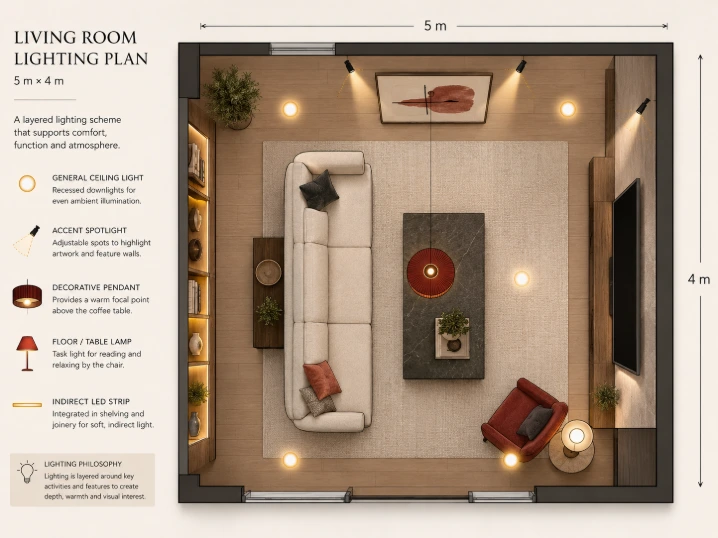
Room Brief
Room size: 5 × 4 m
Area: 20 m²
Main uses: relaxing, TV, entertaining, occasional reading
Ambient target: around 150 lux as a starting point
A Practical Lighting Recipe
1. General lighting
Use ceiling lights or a small number of well-positioned spotlights to provide the basic ambient layer.
2. Accent lighting
Aim selected spotlights toward artwork, textured walls, shelving, curtains or another feature worth highlighting.
3. Decorative lighting
Add a chandelier or pendant only where its scale and position suit the room. Treat it as a focal point rather than assuming it must provide all the light.
4. Task lighting
Place a floor or table lamp beside the seating area used for reading or other focused activities.
5. Indirect lighting
Use LED strip lighting in shelving, joinery or ceiling details where softer background light can add depth.
Mini checklist
Before finalising the plan, confirm that it includes:
- General light for comfortable movement
- Accent light for walls and features
- Decorative light for character
- Task light where activities happen
- Indirect light for atmosphere
Useful point: the best layout follows the furniture plan. If the sofa, artwork or TV wall moves, the ideal lighting positions can change too.
Plan your spotlights Calculate the ambient light level
Choosing a chandelier? Use our chandelier sizing guide
5 Living Room Lighting Mistakes to Avoid
A room can have enough light and still feel uncomfortable or flat. These are some of the most common reasons.
A chandelier or ceiling light can be a strong focal point, but it rarely handles every lighting task well on its own.
Combine it with other layers such as wall lights, spotlights, floor lamps or indirect lighting.
Even spacing may look tidy on the ceiling, but it can ignore the furniture and the surfaces that actually need light.
Position spotlights according to the room layout, artwork, walls and activity zones.
A room can measure well at floor level and still feel visually dark if the walls, shelves and vertical surfaces receive little light.
Lighting selected walls and features adds depth and can make the room feel more spacious.
Living rooms change function throughout the day.
The lighting needed for cleaning, reading or entertaining is not the same as the lighting needed for watching TV or relaxing in the evening.
Where possible, use separate switching or dimming so different layers can work independently.
CCT should support the atmosphere, finishes and way the room is used.
A warm or cooler light source is not automatically better; consistency and purpose matter more than choosing a number in isolation.
Quick check: if every light in the living room has to be switched on at the same time for the room to feel right, the lighting may not be layered effectively.
Build Your Living Room Lighting Plan
Start with the part of the room you are trying to solve. Use the right tool for the calculation, then compare fixture types and categories that fit the plan.
I Know My Room Dimensions
Estimate the ambient light level and the approximate lumen requirement for your space.
I’m Planning Spotlights
Use the room dimensions and layout to estimate spotlight quantity and spacing.
I’m Choosing Beam Angles
Compare how different beam angles spread at a given distance and choose a suitable beam for accent or general lighting.