
To estimate chandelier diameter, add the room’s length and width in feet and use the resulting number in inches. For example, a 12 × 14 ft room generally suits a chandelier approximately 26 inches wide. Above a dining table, choose a chandelier around one-half to two-thirds of the table width while keeping it narrower than the table.
What Size Chandelier Should You Choose?
A chandelier should feel proportional to both the space and the furniture beneath it. A useful starting point is to calculate its diameter from the room dimensions, then refine the result according to the dining table, ceiling height, chandelier shape and visual weight.
For chandeliers installed above furniture—especially dining tables—the furniture dimensions are usually more important than the room dimensions alone.
Quick answer: Measure the room first, check the furniture beneath the chandelier, then adjust for ceiling height and how visually light or substantial the design appears.
Every sizing rule in this guide should be treated as a practical starting point. The final choice must also suit the room layout, circulation space and intended visual impact.
The Three Measurements That Matter
Before choosing a chandelier, record these three measurements. Together, they provide a more reliable starting point than room size alone.
Room Dimensions
Measure the room’s length and width in metres. These dimensions help estimate a suitable chandelier diameter when the fixture will be positioned as a general room centrepiece.
Measure: Length × width
Furniture Dimensions
Measure the width and length of the table, island or furniture beneath the chandelier. When a fixture hangs above furniture, its proportions should relate primarily to that surface.
Measure: Width × length
Ceiling Height
Measure from the finished floor to the ceiling. Ceiling height affects how substantial the chandelier can appear and whether the design has enough vertical space.
Measure: Floor to ceiling
Calculate Chandelier Size from Room Dimensions
When a chandelier acts as the main centrepiece of a room, the room’s length and width can provide a useful starting point for estimating its diameter.
Enter your measurements in the Chandelier & Pendant Size Calculator to compare a starting size with the proportions explained below.
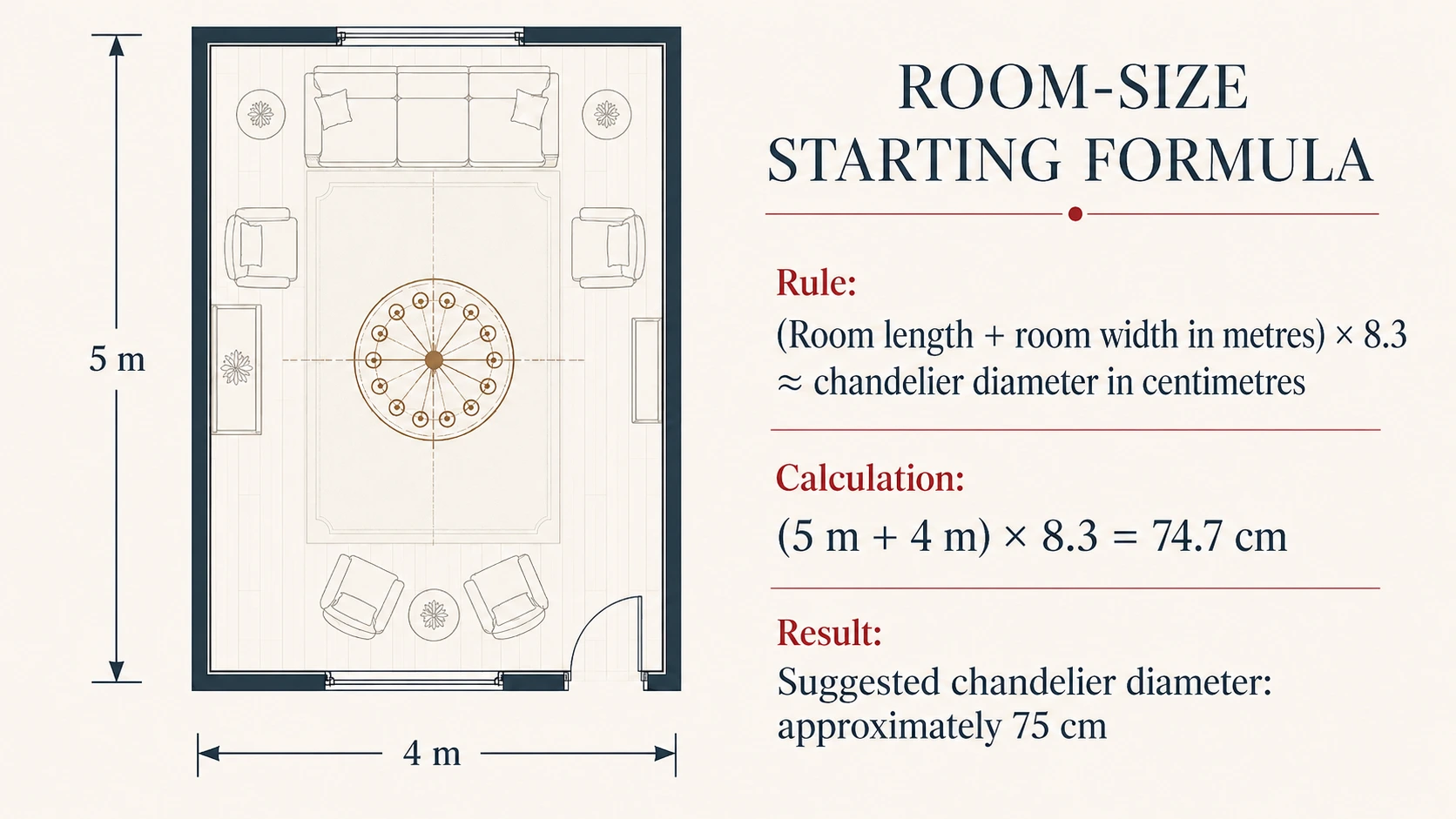
Metric Starting Formula
(Room length + room width in metres) × 8.3 = approximate chandelier diameter in centimetres
For a room measuring 5m × 4m:
(5 + 4) × 8.3 = 74.7cm
A chandelier approximately 75cm in diameter would therefore be a practical starting point.
This estimate should then be refined according to the furniture below, ceiling height, chandelier shape and visual weight. If the chandelier hangs above a dining table, the table dimensions will usually provide the more important reference.
Choose the Right Size Above a Dining Table
When a chandelier hangs above a dining table, the table—not the entire room—should usually become the main sizing reference.
Dining-Table Starting Rule
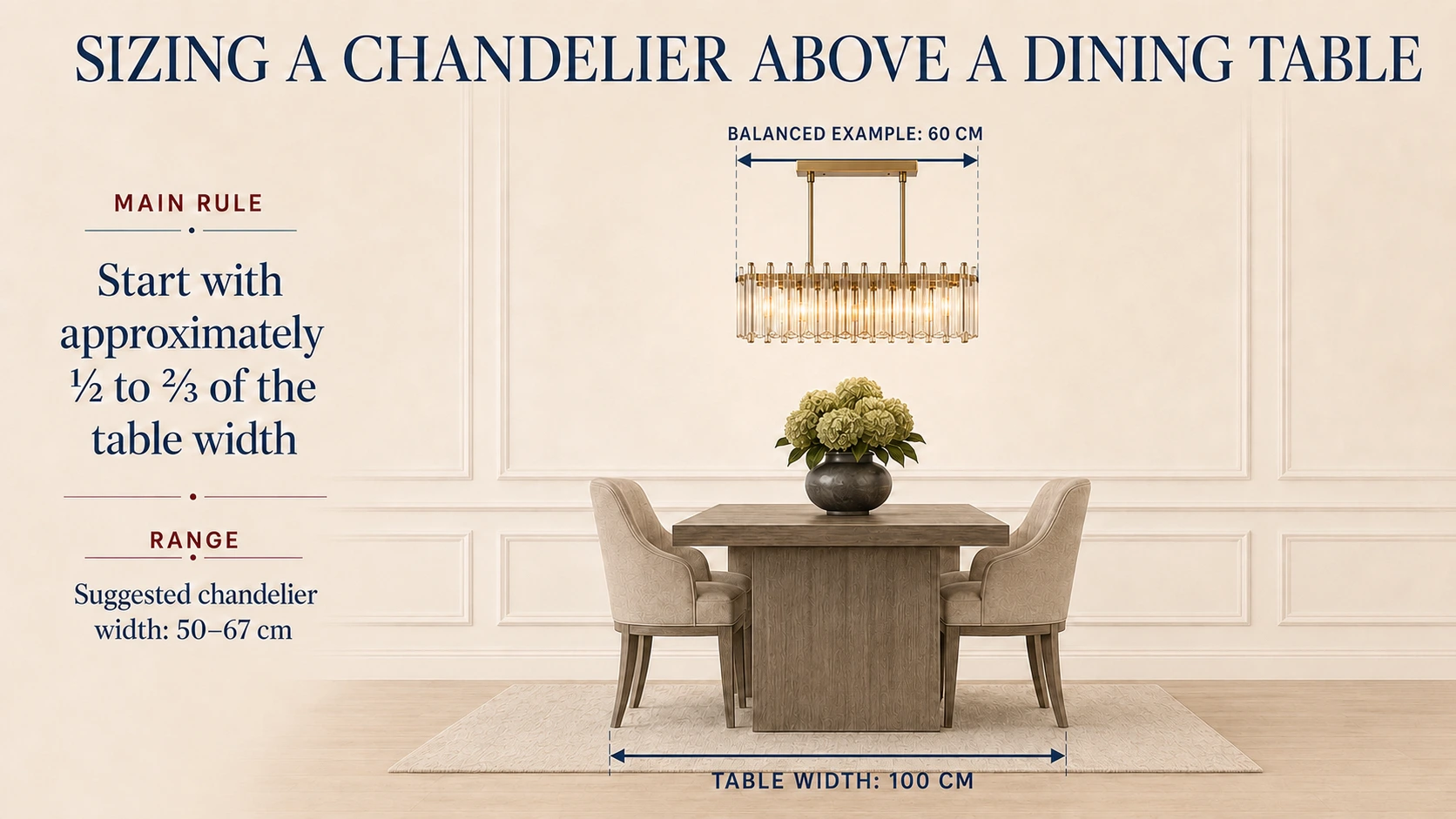
Choose a chandelier approximately one-half to two-thirds of the table’s width.
For a table measuring 100 cm wide, a chandelier between approximately 50 and 67 cm wide provides a practical starting range. A 60 cm chandelier would sit comfortably within that range.
This proportion helps the fixture feel substantial without visually overpowering the table. It also keeps the chandelier comfortably inside the table edges, creating a more balanced composition.
For long rectangular tables, consider an elongated chandelier, a linear design or a coordinated group of pendants. In these cases, both the fixture’s width and length should relate to the table’s proportions.
Important: This rule applies to the chandelier’s overall visible width, including its arms, shades, glass or crystal elements—not only its central frame.
Chandelier Size for a 60-Inch Round Table
For a 60-inch round dining table, start with a chandelier approximately 30–36 inches (76–91 cm) in diameter. A visually light, open-frame chandelier can sit toward the upper end of this range, while a dense crystal or multi-arm design may feel better toward the lower end. Keep the chandelier centred over the table and confirm that its complete visible width remains comfortably inside the table edge.
Too Small, Balanced or Too Large?
Measurements provide a useful starting point, but the chandelier must also look balanced within the complete setting.
- Too small: The chandelier feels disconnected from the table and loses its presence as a focal point.
- Balanced: The fixture relates naturally to the furniture while retaining comfortable visual space around it.
- Too large: The chandelier overwhelms the table, crowds the composition and makes the room feel visually heavy.
The comparison below uses the same chandelier, dining table and interior. Only the chandelier diameter changes, showing how scale alone can transform the balance of a room.
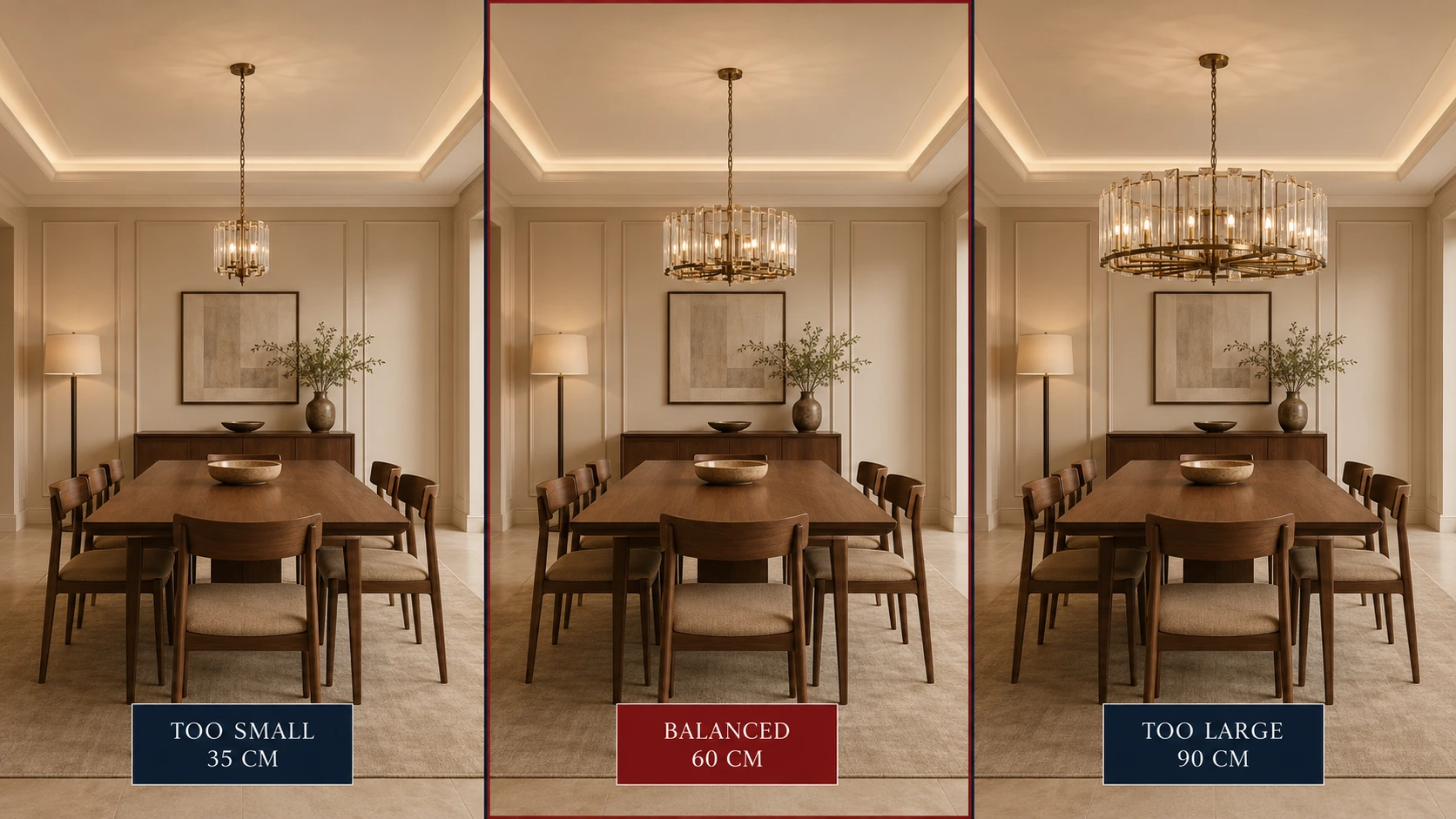
The 35 cm, 60 cm and 90 cm diameters are comparative examples for this specific room—not universal size recommendations.
Look at the complete composition: The best chandelier is not simply the largest size that fits. It should create a clear focal point while remaining proportional to the furniture, ceiling and surrounding open space.
Match the Chandelier Shape to the Space
Chandelier dimensions are only part of the decision. The fixture’s shape should also relate to the furniture, room layout and viewing direction.
A matching shape creates visual order, while a deliberately contrasting shape can become a stronger focal point. Use the following combinations as practical starting points—not fixed design rules.
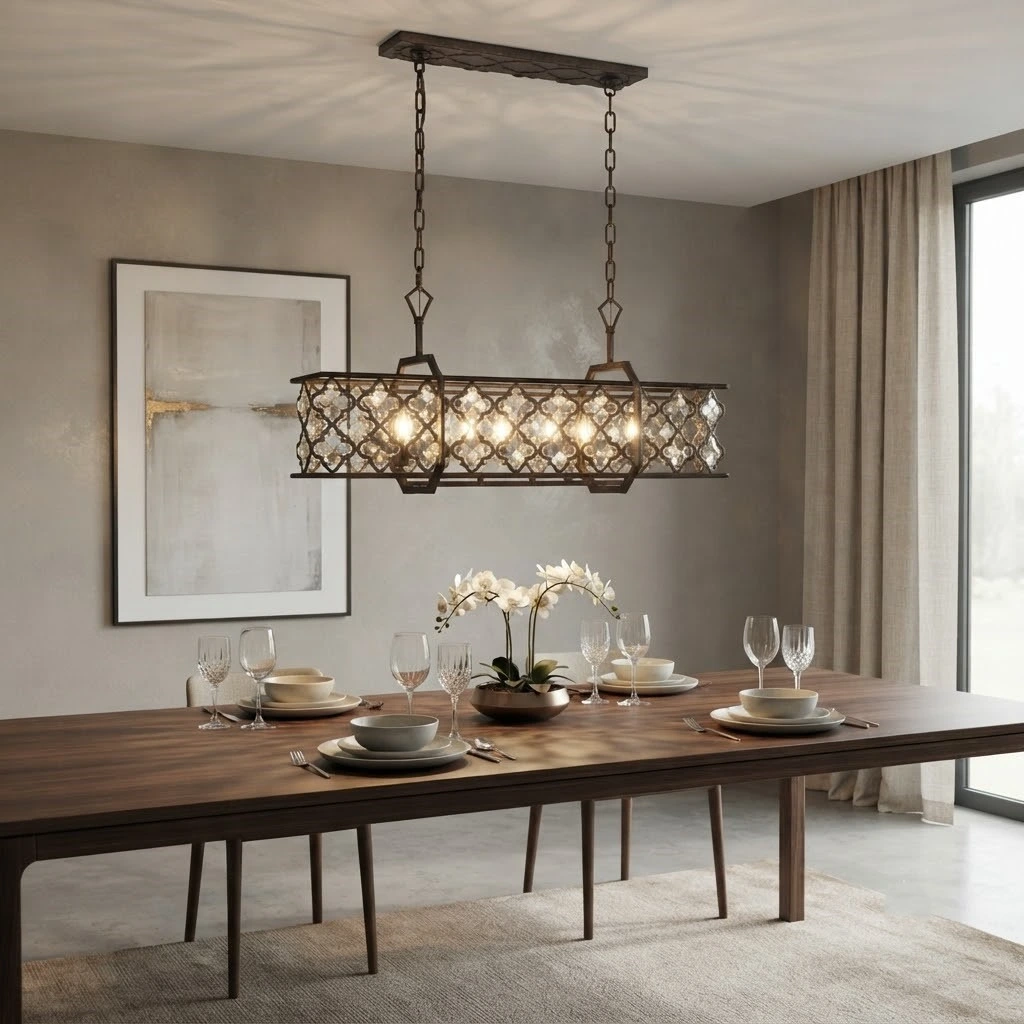
Clustered & Multi-Light
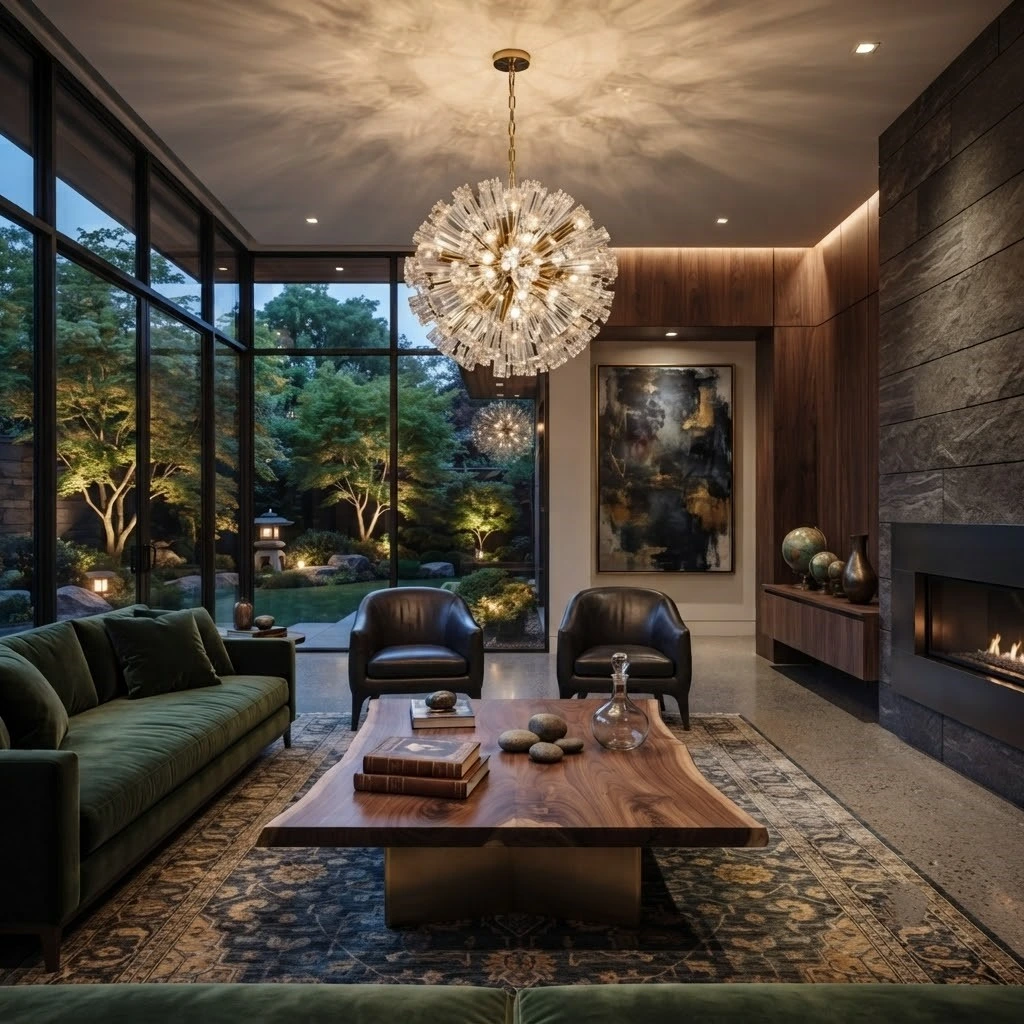
Clustered chandeliers combine multiple suspended elements into one flowing composition. Consider their overall spread and drop as a complete fixture.
Best suited to: Staircases, entrance voids, corners and vertical spaces.
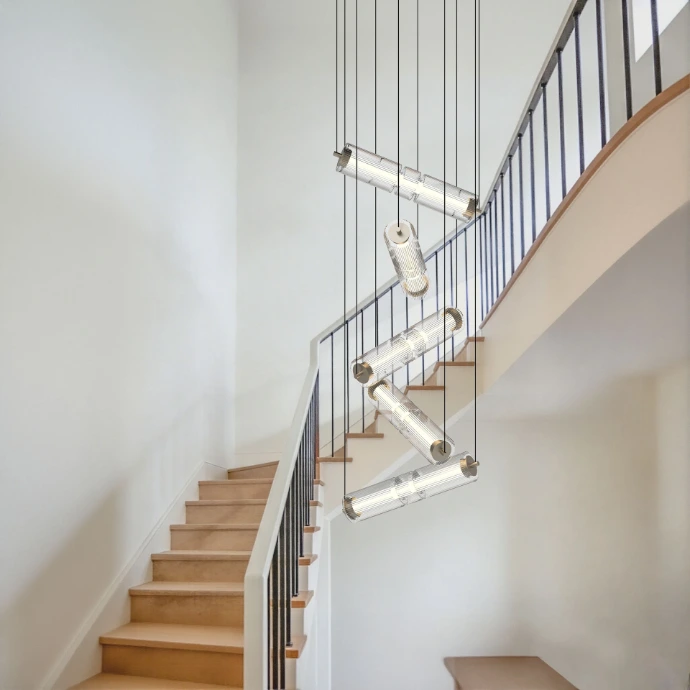
Multi-Tier & Statement
Multi-tier chandeliers use width and height to create impact. Allow enough open space for their structure to stand out.
Best suited to: Large rooms, formal entrances and double-height spaces.
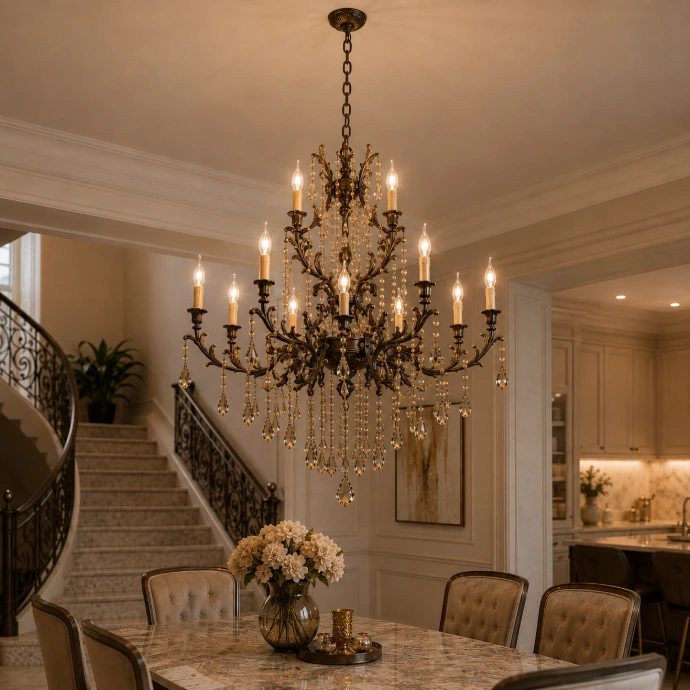
Round & Symmetrical
A round or evenly balanced chandelier naturally centres the composition. It works especially well when the furniture and surrounding space are viewed from several directions.
Linear & Elongated
A linear chandelier follows the furniture’s length and distributes visual emphasis more evenly. Check both its width and length rather than relying on diameter alone.
Best suited to: Rectangular dining tables, kitchen islands and long open-plan spaces.
Why Visual Weight Changes Perceived Size
Two chandeliers can have exactly the same dimensions yet feel completely different within the same room.
An open-frame chandelier allows the surrounding architecture to remain visible through its structure, making it feel lighter and less dominant. A dense chandelier with closely grouped arms, shades or crystal elements occupies more visual space and therefore appears larger.
This is known as visual weight.
When comparing chandeliers of the same diameter:
- Light visual weight: Slim arms, open frames and generous space between elements create an airy appearance.
- Heavy visual weight: Dense crystals, multiple arms and closely grouped details create a stronger visual presence.
A visually light chandelier can often work comfortably at the upper end of the recommended size range. A dense or highly decorative chandelier may feel appropriately substantial at a smaller diameter.
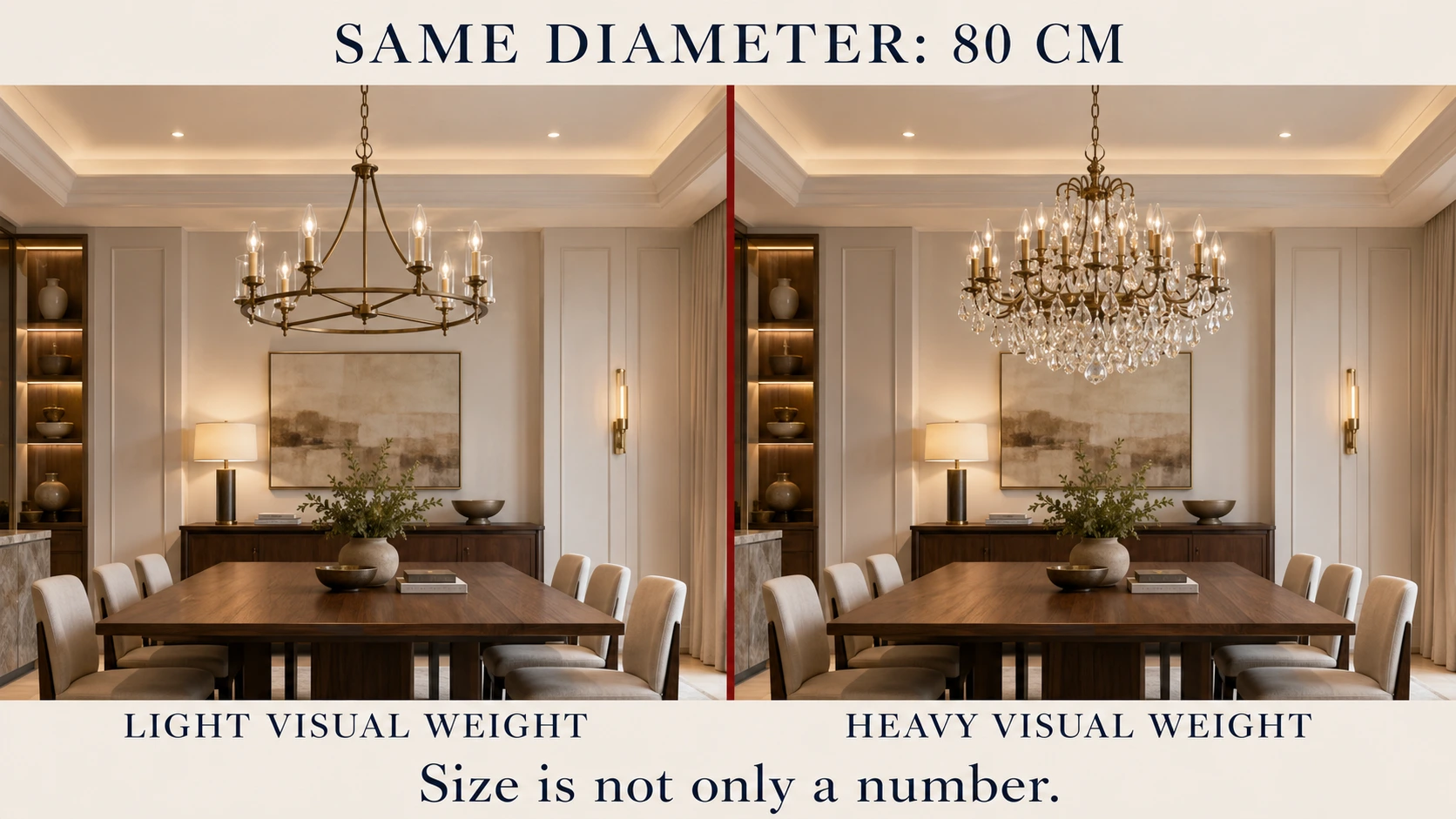
Both chandeliers measure 80 cm in diameter; their different visual impact comes from the density and openness of their designs.
Size is not only a number: Consider how much visual space the chandelier occupies—not only its measured width or diameter.
Room-by-Room Chandelier Guide
The correct chandelier size depends on how the room is used, what sits beneath the fixture and how the chandelier will be viewed. Use these room-specific guidelines to refine the measurements calculated earlier.
This section covers fixture proportion. For lighting layers and placement around the furniture, see the dining room, living room and corridor and staircase lighting guides.
Use the dining table as the primary sizing reference. A chandelier approximately one-half to two-thirds of the table’s width is a practical starting point.
Round or symmetrical chandeliers suit round and square tables, while linear fixtures generally work better above long rectangular tables.
When the chandelier is centred within an open seating area, use the room-size formula as the starting point, then consider the furniture arrangement and visual weight.
The fixture should anchor the seating area without overpowering the room or interfering with circulation.
Bedroom chandeliers usually benefit from a lighter visual presence than dining-room or entrance fixtures.
Consider the bed size, ceiling height and placement carefully. Open-frame, compact or softly detailed designs often create impact without making the room feel crowded.
An entrance chandelier should create a strong first impression while remaining proportional to the surrounding architecture.
In compact foyers, choose a refined fixture with controlled visual weight. Larger entrances can support wider or more decorative statement designs.
These spaces can accommodate chandeliers with greater vertical presence, including clustered, cascading and multi-tier designs.
Evaluate the fixture’s complete width, height and drop as one composition. It should remain visible from multiple floors without crowding nearby walls or architectural features.
The island—not the entire kitchen—should guide the fixture’s proportions.
Linear chandeliers and coordinated pendant arrangements generally suit long islands. Keep the lighting composition comfortably within the island edges and visually centred along its length.
Start with the object beneath the chandelier: When a table, island or seating arrangement clearly defines the installation area, its proportions are usually more useful than the room dimensions alone.
Common Chandelier-Sizing Mistakes
Even a carefully measured chandelier can feel unsuitable when its shape, placement or visual weight is overlooked. Avoid these common mistakes before making the final selection.
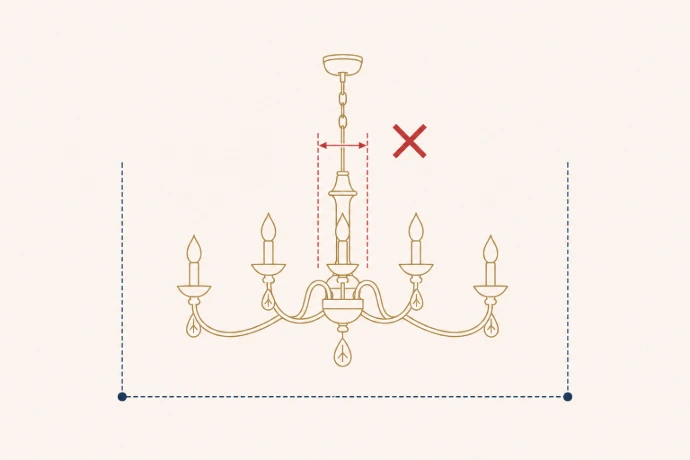
1. Measuring Only the Frame
Use the chandelier’s complete visible width, including arms, shades, glass and crystals—not only the central body or metal frame.

2. Using Room Size Alone
Room dimensions provide a starting estimate, but furniture should become the main reference when the chandelier hangs above a dining table, island or defined seating area.
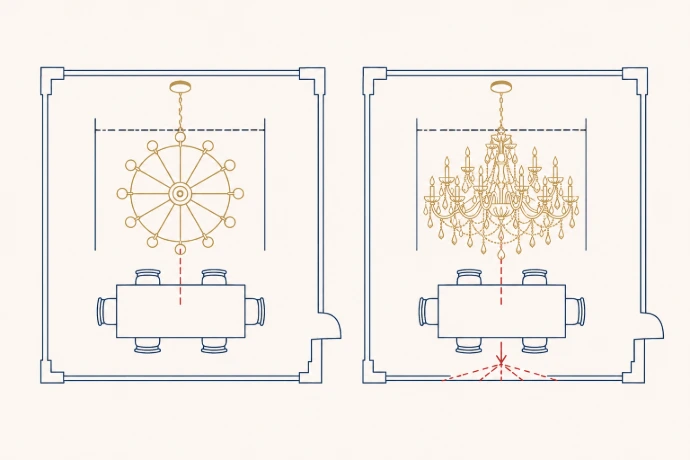
3. Ignoring Visual Weight
A dense crystal chandelier can appear larger than an open-frame design with the same diameter. Consider how much visual space the complete fixture occupies.
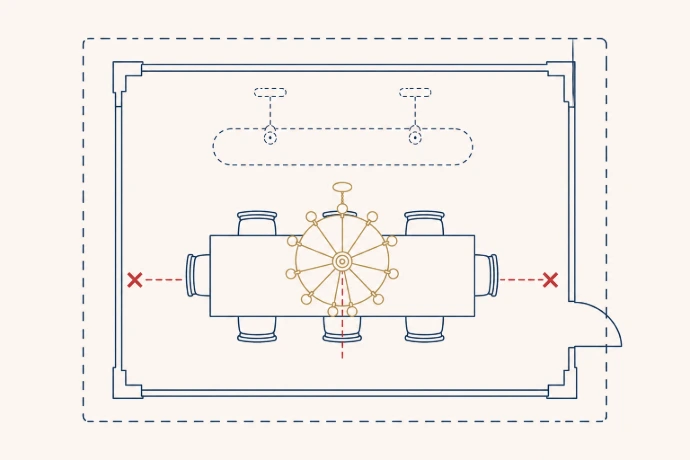
4. Choosing the Wrong Shape
A round chandelier may feel disconnected above a long rectangular table. Match the fixture’s shape and proportions to the surface or space beneath it.
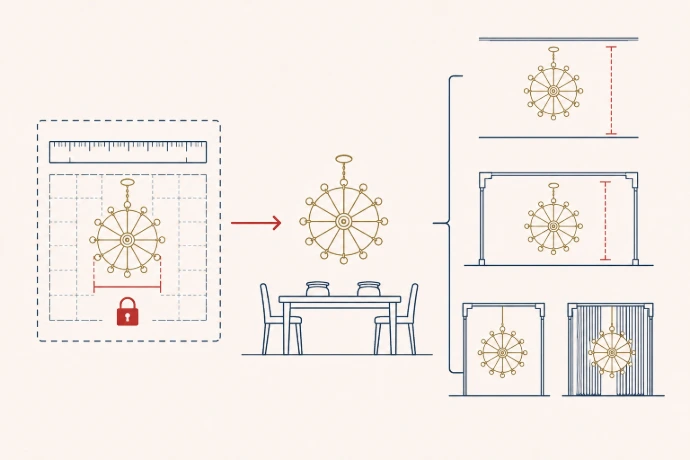
6. Treating Sizing Rules as Fixed
Sizing formulas provide practical starting points—not universal answers. Refine the result according to ceiling height, room layout, circulation and the desired visual impact.
Measure before choosing: Record the room, furniture and ceiling dimensions, then compare them with the chandelier’s complete published width, height and overall spread.
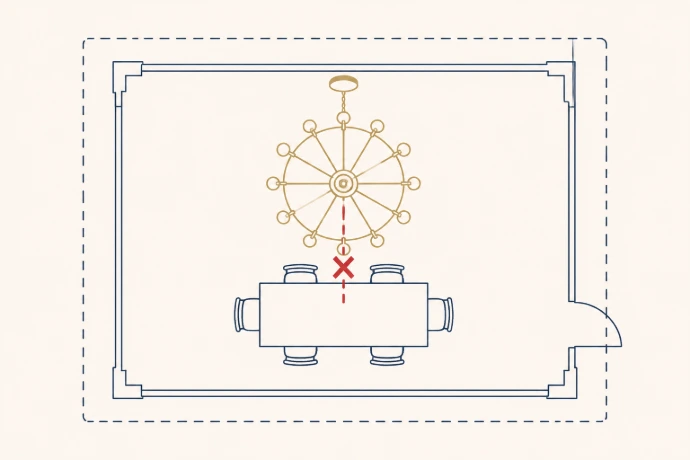
5. Judging from Product Photos Alone
Close-up product images can make a chandelier appear larger than it is. Always verify the published dimensions and compare them with the intended room or furniture.
Frequently Asked Questions
These answers summarise the main chandelier-sizing principles and help resolve common decisions before choosing a fixture.
Add the room’s length and width in metres, then multiply the total by 8.3 to estimate the chandelier diameter in centimetres.
For a 5 m × 4 m room:
(5 + 4) × 8.3 = 74.7 cm
A chandelier approximately 75 cm in diameter is a practical starting point.
A chandelier approximately 30–36 inches (76–91 cm) wide is a practical starting range for a 60-inch round table. Adjust within that range according to ceiling height, chandelier shape and visual weight.
Choose a chandelier approximately one-half to two-thirds of the table’s width.
Above a 100 cm-wide table, a chandelier around 50–67 cm wide provides a useful starting range.
Usually, the chandelier should remain comfortably within the table edges. A wider fixture can make the composition feel crowded and may appear disproportionate from different viewing angles.
For long tables, consider a linear or elongated chandelier instead of increasing the diameter of a round fixture.
When the chandelier hangs above a dining table, kitchen island or defined furniture arrangement, use that object as the primary sizing reference.
Use room dimensions when the chandelier functions as a general room centrepiece without furniture directly beneath it.
Consider the fixture’s visual weight. An open-frame chandelier can often work at the larger end of the recommended range, while a dense crystal or highly decorative design may feel substantial at a smaller size.
Also compare the ceiling height, furniture proportions and desired visual impact.
Yes. Higher ceilings can support chandeliers with greater height and visual presence, while lower ceilings usually require more compact proportions.
Ceiling height also affects the chandelier’s installation and hanging distance, which will be covered separately in our chandelier hanging-height guide.
The best size combines measurement and visual judgement: Calculate a starting range, compare it with the furniture, then refine it according to shape, ceiling height and visual weight.


Find the Right Chandelier for Your Space
Explore chandeliers in different sizes, shapes and styles. Compare each fixture’s dimensions with your room and furniture before choosing.
Shop Chandeliers