
How many spotlights a room needs depends on its area, required light level, spotlight lumen output, ceiling height, beam angle and furniture layout.
As a practical starting point, many medium-sized bedrooms use approximately four to six recessed spotlights, while medium-sized living rooms often begin with six to ten. The correct number must still be checked against the room dimensions, required brightness, beam coverage and spacing.
Use the calculation method and room-by-room examples below to estimate your requirements, then test your layout with the Saleh Deco Spotlight Layout Calculator.
Quick Spotlight Calculation
Estimated spotlight quantity = Room area × Target lux ÷ Lumens per spotlight
For example, a 20m² room targeting 150 lux requires approximately 3,000 lumens. With 500-lumen spotlights, the initial estimate is six spotlights. The final layout must then be checked for beam coverage, spacing, furniture position and additional decorative or task lighting.
How many spotlights do I actually need?
The answer depends on far more than the size of the room.
A well-designed lighting layout considers:
- room dimensions
- ceiling height
- beam angle
- brightness (lumens)
- furniture layout
- natural daylight
- the purpose of the room
Installing too few spotlights creates dark areas and uneven lighting. Installing too many can make a room uncomfortable, inefficient, and visually cluttered.
This guide explains how lighting professionals determine the right number and spacing of recessed LED spotlights for different spaces. Whether you're renovating a home, designing a new space, or upgrading existing lighting, these principles will help you create a balanced and comfortable lighting layout.
Too Few Spotlights
- Dark corners
- Uneven lighting
- Heavy shadows
- Poor task lighting
Too Many Spotlights
- Overly bright room
- Wasted energy
- Visual clutter
- Higher installation cost
Why There Is No Single Right Number
Many people expect a simple answer such as:
"Use six spotlights."
Professional lighting design doesn't work that way.
Two living rooms measuring exactly 25 square metres may require completely different lighting layouts depending on:
- ceiling height
- furniture
- wall colours
- window size
- beam angle
- spotlight output
- decorative lighting
- task lighting
Rather than asking:
"How many spotlights?"
Ask:
"How much light does this room need?"
What Determines the Number of Spotlights?
Room size
A larger room normally needs more total light, but floor area alone does not determine the final quantity of spotlights. The room’s shape also matters. A long corridor, square bedroom, and open-plan living room may have the same area but require very different layouts.
Begin by measuring the room’s length and width, then identify the areas that need ambient, task, or accent lighting.
Ceiling height
As the ceiling becomes higher, the light travels farther before reaching the floor and work surfaces. This generally creates a wider pool of light but reduces its intensity.
Higher ceilings may therefore require:
- Higher-output spotlights
- Narrower or more controlled beam angles
- Closer spacing
- Additional accent or task lighting
Low ceilings often benefit from wider beams and lower-glare fixtures to avoid harsh pools of light.
Beam angle
Beam angle determines how widely a spotlight distributes its light.
A narrow beam creates a concentrated pool of light. A wide beam covers a larger area with softer illumination. This means two spotlights with the same wattage and lumen output can produce very different results.
For directional lighting products, beam angle is one of the key specifications used to distinguish concentrated “spot” distributions from wider “flood” distributions.
Lumens
Lumens measure the amount of visible light produced by the fixture.
Do not calculate spotlight quantity using wattage alone. Two LED spotlights with the same wattage can produce different lumen outputs because of differences in LED chips, drivers, optics, efficiency, and thermal design.
Watts describe power consumption, while lumens and lumens per watt describe light output and efficiency.
To calculate the total light required before dividing it between spotlights, see our Lux vs Lumens room-lighting guide.
Room purpose
The intended use of the room changes the required lighting level.
A bedroom may need soft ambient lighting with separate bedside lamps. A kitchen needs stronger illumination over worktops. A living room usually benefits from layered lighting rather than one uniform ceiling grid.
Before choosing the quantity, identify whether the spotlights will provide:
- General ambient lighting
- Task lighting
- Accent lighting
- Decorative emphasis
- A combination of these functions
Natural daylight
Large windows can reduce the need for artificial lighting during the day, but they should not replace a complete evening-lighting plan.
Consider:
- Window size
- Orientation
- Curtains or blinds
- Nearby buildings
- Seasonal changes
- How the room is used after sunset
Spotlight planning should be based primarily on the room’s required nighttime performance.
Wall colours
Light-coloured walls and ceilings reflect more light into the room. Dark paint, wood panels, stone, and heavy fabrics absorb more light and may require additional output or closer spacing.
A bright white room can appear well lit with fewer fixtures, while a dark interior of the same size may need more carefully positioned light.
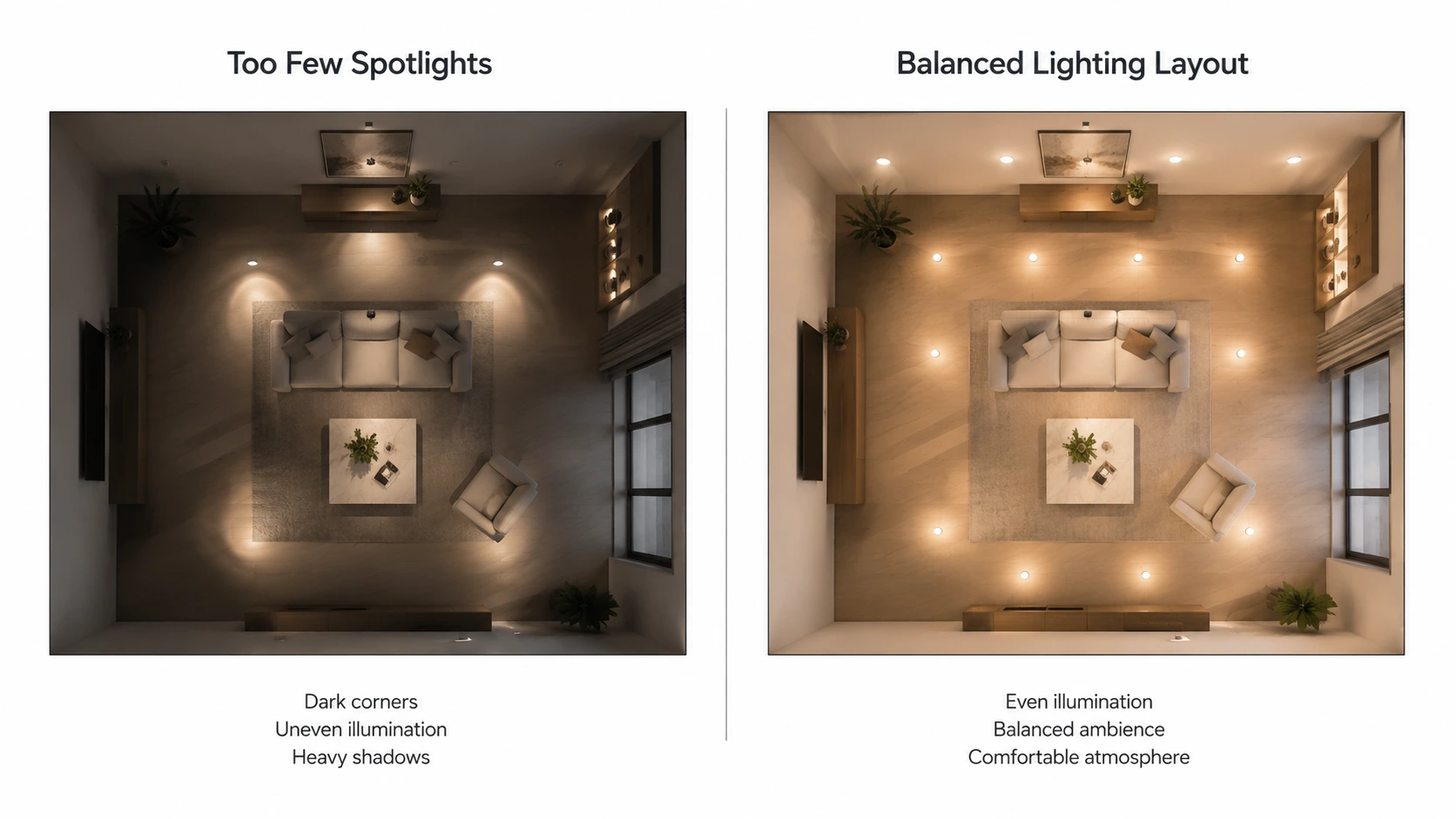
Too few spotlights create dark corners and isolated pools of light, while a balanced layout distributes illumination more evenly across the room.
How Far Apart Should Spotlights Be?
These figures are practical starting ranges, not fixed rules.
| Ceiling height | Typical starting spacing |
|---|---|
| 2.4m | 1.2–1.5m |
| 2.7m | 1.4–1.8m |
| 3.0m | 1.6–2.0m |
The final spacing depends on:
- Beam angle
- Lumen output
- Fixture type
- Required brightness
- Furniture and work surfaces
- Reflective or dark finishes
- Whether the spotlights provide general or accent lighting
A useful starting principle is to space fixtures so that adjacent light beams overlap before reaching the main working plane. This reduces dark gaps and produces a more uniform result.
Distance From the Wall
For general ambient layouts, the first row of spotlights is often positioned approximately half the distance used between fixtures.
For example, if the spotlights are spaced 1.6m apart, the first row may begin around 0.8m from the wall.
This should be adjusted when:
- Highlighting artwork or wall textures
- Lighting kitchen cabinets
- Avoiding glare on television screens
- Illuminating curtains
- Preventing scalloped wall patterns
Pro Tip
Use spacing as a design starting point—not as an automatic grid.
The best layout follows the furniture, circulation paths, artwork, work surfaces, and architectural features of the room.
Beam Angle Changes Everything
Check beam coverage before fixing the spotlight count. A 24° beam suits focused accents, 36° offers a middle ground, and 60° gives broader coverage. None determines spacing on its own: mounting distance, optics, lumen output and the task surface also matter.
Use the 24° vs 36° vs 60° beam angle guide for the full comparison and the Beam Angle Calculator for the footprint, then return to the room layout.
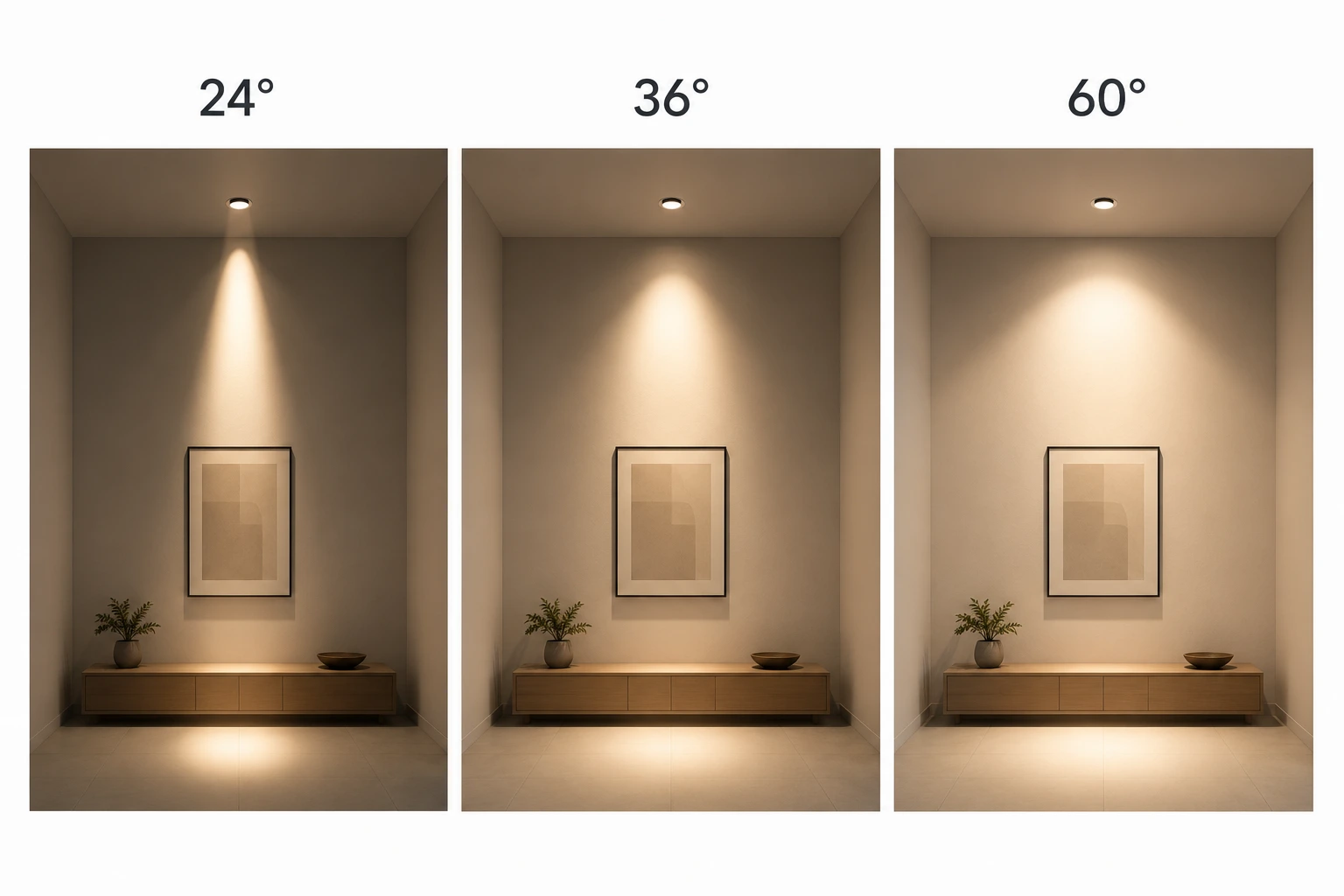
A narrower beam concentrates light on a smaller area, while a wider beam provides broader and softer coverage.
How Many Spotlights Does Each Room Need?
Use these short examples to refine fixture quantity. For complete room layouts, continue with the living room, kitchen or bathroom lighting guide.
Living Room
A living room should not rely on one rigid grid of ceiling spotlights.
Use the spotlights to support:
- The main seating area
- Artwork
- Shelving
- Curtains
- Architectural surfaces
- Circulation paths
Avoid placing a spotlight directly above every seat, where it may create glare or uncomfortable facial shadows.
A medium-sized living room may use several recessed spotlights combined with:
- A decorative pendant
- Floor or table lamps
- Wall lighting
- Indirect LED lighting
The exact quantity depends on room size, ceiling height, beam angle, and fixture output, but six to ten spotlights is a common starting range for many medium-sized residential living rooms. This should be treated as a general planning guideline rather than a fixed rule.
Bedroom
Bedrooms usually need less general ceiling light than kitchens or offices.
A practical layout often uses:
- Four to six general spotlights
- Bedside lamps or reading lights
- Wardrobe lighting where needed
- Optional indirect lighting
Avoid positioning strong spotlights directly above the pillows. Place them around the circulation and dressing areas instead.
Kitchen
Kitchen lighting should follow the work surfaces, not only the centre of the ceiling.
Prioritize:
- Worktops
- Sink
- Hob
- Island
- Tall storage
- Circulation areas
Avoid placing the spotlight directly behind the person using the worktop, because their body may cast a shadow on the preparation surface.
A kitchen often needs more light than a bedroom of the same size, but under-cabinet or integrated task lighting may reduce the number of ceiling spotlights required.
Bathroom
Bathroom spotlight planning should separate general lighting from mirror lighting.
Use ceiling spotlights to illuminate:
- The main floor area
- Shower or bath zone where the fixture rating is suitable
- Storage
- Circulation
Do not rely on a ceiling spotlight directly above the face for mirror lighting. It can create deep eye and chin shadows. Use dedicated vertical or frontal mirror lighting where possible.
Fixture placement must also respect the appropriate bathroom safety zones and IP rating.
Office
An office needs comfortable and controlled lighting rather than simply high brightness.
Consider:
- Desk position
- Computer screens
- Glare
- Daylight
- Shelving
- Video-call background
Avoid placing strong spotlights where they reflect directly in screens.
For general office illumination, use wider or carefully overlapped beams, then add a dedicated task light where required.
Common Mistakes
Installing Spotlights Only Around the Perimeter
This can leave the centre of the room dark and make the ceiling layout feel disconnected from the furniture.
Ignoring the Furniture Plan
A technically even grid may still be wrong if it places lights above television screens, behind people working at counters, or directly over seating positions.
Using Identical Spacing Everywhere
Different parts of a room may need different light levels. A reading corner, artwork wall, and circulation route should not automatically receive the same treatment.
Choosing by Wattage Instead of Lumens
Wattage measures energy use, not visible brightness. Compare lumen output and optical performance.
Forgetting Beam Angle
A narrow spotlight and a wide spotlight may have the same wattage but create completely different coverage.
Mixing Colour Temperatures Accidentally
Randomly combining 3000K and 4000K can make a room look inconsistent. Use one temperature unless the zones are deliberately separated.
Ignoring Dimming
A well-planned dimming system provides flexibility between daytime activity, evening relaxation, entertaining, and cleaning.
Using Only Ceiling Spotlights
A room illuminated entirely from the ceiling can feel flat. Combine recessed spotlights with decorative, wall, task, or indirect lighting where appropriate.
Saleh Deco Recommendation
Do not begin by choosing a number of spotlights.
Begin by identifying the room’s functions, furniture, focal points, required brightness, and desired atmosphere.
Then select the fixture output, beam angle, and placement. The correct quantity becomes the result of the lighting design—not an arbitrary starting number.
For most residential projects, Saleh Deco recommends combining evenly distributed ambient light with selected accent and task lighting rather than covering the entire ceiling with one repetitive grid.
FAQ
There is no universal number. A medium living room may commonly begin with approximately six to ten recessed spotlights, depending on room size, ceiling height, fixture output, beam angle, wall colours, and the presence of decorative lamps.
The aim should be layered and comfortable lighting, not maximum brightness.
Many medium bedrooms can begin with approximately four to six spotlights, supported by bedside or reading lights.
Avoid placing high-output spotlights directly above the bed. Prioritize wardrobes, circulation areas, and dressing spaces.
Symmetry can make the ceiling appear organized, but the layout should also respond to the room below.
A perfectly symmetrical ceiling grid may perform poorly if the furniture, kitchen worktops, artwork, or architectural features are asymmetrical.
Use visual order without ignoring function.
Move them closer when intentionally washing a wall or highlighting artwork, and farther away when wall reflections or scalloping would be distracting.
Yes.
A room may use:
- Wide beams for ambient lighting
- Medium beams for general accent lighting
- Narrow beams for artwork or focal points
The mixture should be deliberate and coordinated. Randomly mixing beam angles in identical fixtures can create an uneven appearance.
No.
Fixed spotlights are suitable for predictable general lighting. Adjustable fixtures are useful where the light must be aimed toward:
- Artwork
- Shelving
- Textured walls
- Retail products
- Architectural details
Use adjustable fixtures where aiming flexibility has a clear purpose.
For many refined interiors, a larger number of moderately powered fixtures can create smoother and more comfortable illumination than a few very bright sources.
However, excessive fixture quantity increases cost and visual clutter. The best solution balances output, spacing, beam angle, glare, and ceiling design.
For the most comfortable and visually appealing interiors, recessed spotlights should ideally be combined with decorative, wall, floor, table, or indirect lighting to create a layered lighting scheme.
Calculate Your Spotlight Requirements
Estimate the light required for your room, then plan spotlight quantity, spacing, beam coverage, and wall offsets using Saleh Deco’s lighting calculators.
Explore Relevant Lighting
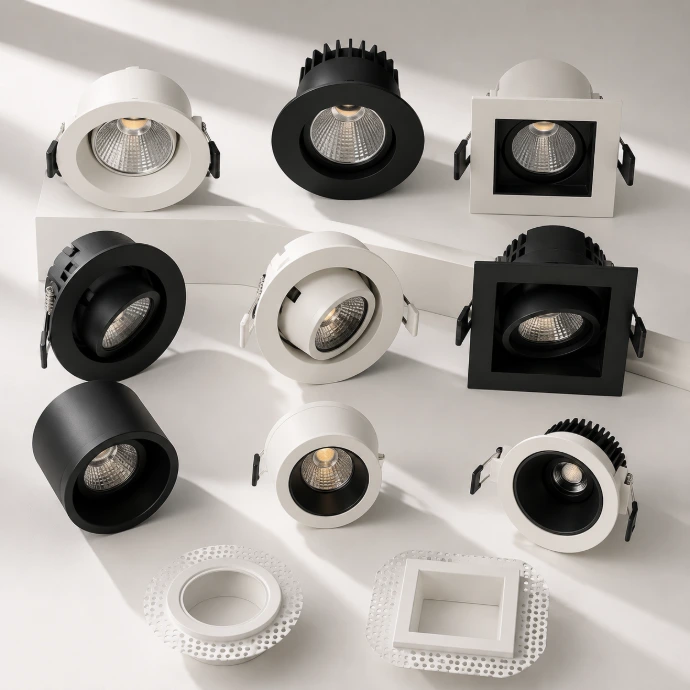
NOX Recessed Spotlights
Fixed, adjustable, deep-recessed, trimless, and architectural spotlight solutions for residential and commercial interiors.
Explore Technical Spotlights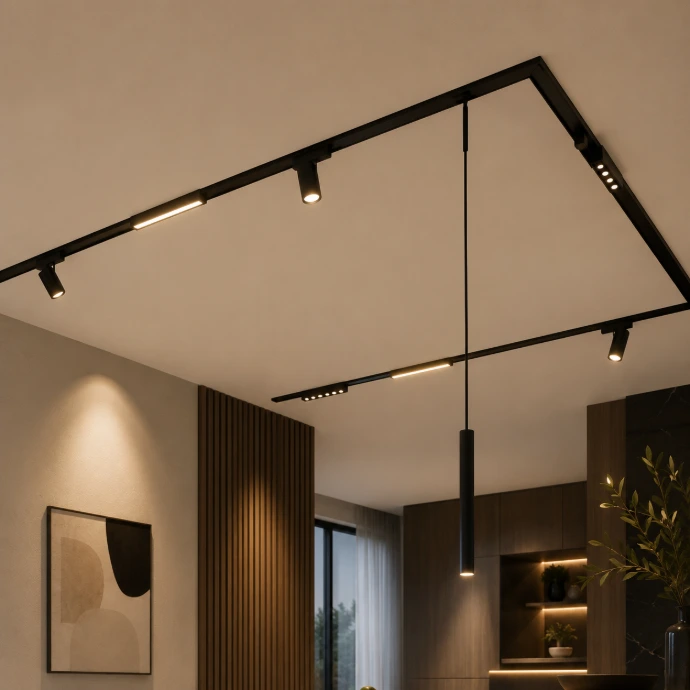
Magnetic Track Lighting
Flexible modular systems that allow spotlights, linear modules, pendants, and accent elements to be repositioned along the track.
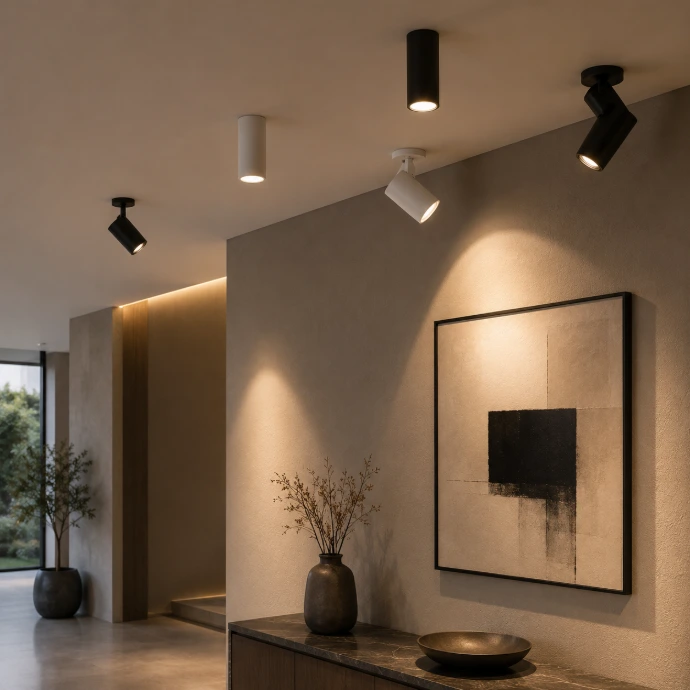
Surface Spotlights
Surface-mounted and adjustable lighting solutions for interiors where recessed installation is unavailable or not preferred.
Planning a Spotlight Layout?
The right number of spotlights depends on your room dimensions, ceiling height, furniture layout, beam angle, lumen output, and the atmosphere you want to create.
Send Saleh Deco your floor plan or room measurements, and our lighting specialists will recommend a practical starting layout and suitable spotlight solutions for your project.
Ask Saleh Deco Explore Technical Spotlights